The Story of Osaka Castle: Wooden Architecture and Toyotomi Hideyoshi’s Legacy
2026年02月23日
Explore the legacy of Osaka Castle’s wooden architecture. Although today’s keep is concrete, you will discover Toyotomi Hideyoshi’s original wooden masterpiece and Tokugawa rebuilds. Understand the ongoing debate for a future wooden restoration.
目次
Introduction to Japanese Castles and the Marvel of Wooden Architecture
The Enduring Significance of Traditional Japanese Castles
Japanese castles, known as shiro, are iconic fortresses primarily constructed from a masterful combination of wood and stone, evolving from simpler wooden stockades over centuries to reach their most recognizable and complex forms by the 16th century. These magnificent structures were far more than mere military fortifications; they served as multifaceted centers of power, governance, and culture throughout Japan’s feudal history. The true marvel of these fortresses lies in their traditional wooden architecture, which allowed builders to construct towering, multi-storied keeps capable of withstanding Japan’s frequent earthquakes and typhoons.
Their prominence surged during the turbulent Sengoku period (Warring States period, 1467–1603), an era marked by incessant civil war where powerful warlords, known as daimyo, vied for control. Castles were strategically built to defend territories, protect populations, and project the authority of their builders. They were often situated on natural elevations like hills or artificial mounds, integrating the landscape into their defensive designs. The evolution of Japanese castles mirrors the country’s historical trajectory, from early wooden enclosures in the Heian period to more militaristic mountain castles in the Muromachi period, and then elaborate stone-based fortresses topped with grand wooden superstructures in the Azuchi-Momoyama period.
Today, while many original structures were lost to wars, fires, or government policies, numerous castles have been meticulously reconstructed or preserved. They now stand as invaluable cultural heritage sites and popular tourist destinations, offering visitors profound insights into feudal Japan, samurai culture, and the nation’s rich architectural ingenuity.
Osaka Castle: A Symbol of Power and Architectural History
Among Japan’s most renowned and historically significant fortresses, Osaka Castle (Ōsaka-jō) stands as an enduring symbol of power, resilience, and the dramatic events that shaped the nation. Its story is inextricably linked with one of Japan’s most influential historical figures, Toyotomi Hideyoshi, who initiated its construction in 1583. Hideyoshi envisioned Osaka Castle not merely as a military stronghold but as a grand statement of his authority and a central base from which to unify Japan after the tumultuous Sengoku period.
Its strategic location and imposing architecture were designed to awe both allies and adversaries, reflecting Hideyoshi’s ambition to consolidate power and establish a centralized government. The original fortress was a pinnacle of traditional wooden architecture, featuring massive timber pillars, intricate joinery, and a lavishly decorated wooden main keep that dominated the skyline. It represented the zenith of Momoyama-period craftsmanship and architectural ambition.
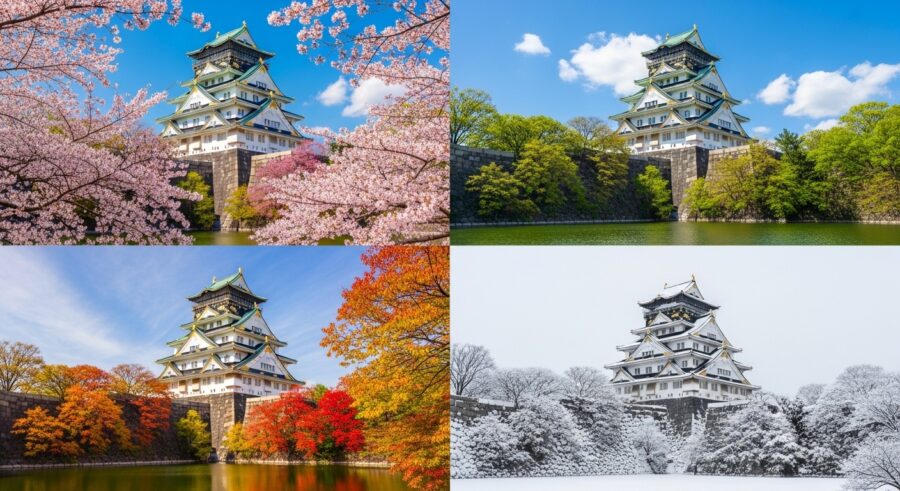
The castle has witnessed a turbulent past, undergoing multiple destructions and subsequent reconstructions. Notably, it suffered extensive damage during the Siege of Osaka in the early 17th century, a pivotal conflict between the Toyotomi and Tokugawa clans that dramatically shifted Japan’s political landscape. Despite these challenges, including fires that consumed its magnificent wooden structures, the castle has been diligently rebuilt over centuries. The current main tower, a concrete reconstruction completed in 1931, faithfully replicates the external appearance of the Edo-period design. Today, Osaka Castle is a vibrant landmark and a major tourist attraction, surrounded by a vast park that offers a green oasis in the heart of the city.
Key Aspects of Wooden Castle Construction
The formidable defensive capabilities and distinctive aesthetics of Japanese castles were achieved through a profound understanding of timber and structural engineering. The construction of these fortresses relied heavily on the mastery of wood, utilizing massive timbers and sophisticated techniques to create structures that were both flexible and incredibly strong.
| Architectural Element | Description | Significance in Wooden Construction |
|---|---|---|
| Tenshukaku (Main Keep) | The central, multi-storied tower of the castle, traditionally built entirely of wood over a stone foundation. | Served as the ultimate stronghold and a symbol of the lord’s power. Its complex wooden framework was designed to distribute weight evenly and flex during seismic activity. |
| Kigumi (Wood Joinery) | Traditional interlocking wooden joints crafted without the use of metal nails or brackets. | Allowed the massive wooden beams and pillars to expand, contract, and absorb shock, providing immense structural resilience against earthquakes and high winds. |
| Ishigaki (Stone Walls) | Massive walls supporting the castle’s base, built with large, fitted stones (often dry-laid). | Provided a solid, well-drained, and earthquake-resistant foundation essential for supporting the immense weight of the towering wooden superstructures above. |
| Yagura (Turrets) | Wooden watchtowers positioned strategically along the castle walls and corners. | Functioned as crucial defensive points for archers and matchlock gunners, built with robust timber frames to withstand enemy fire and harsh weather. |
| Mon (Gates) | Complex entrance structures, often featuring heavy wooden doors reinforced with iron studs and plates. | Controlled access and served as strategic traps. The heavy timber construction made them highly resistant to battering rams and fire. |
Toyotomi Hideyoshi’s Vision: The Birth of a Wooden Masterpiece
From Humble Origins to Unifier of Japan
The saga of Osaka Castle is inextricably linked with its visionary builder, Toyotomi Hideyoshi, a figure whose remarkable ascent from obscurity to the pinnacle of power shaped the course of Japanese history. Born in 1537 into a humble peasant family, Hideyoshi’s early life was marked by poverty, a stark contrast to the noble origins of many of his contemporaries.
His journey to becoming one of Japan’s most influential warlords began when he joined the army of the formidable Oda Nobunaga as a foot soldier. Hideyoshi’s exceptional military prowess, strategic acumen, quick wit, and diplomatic skills quickly caught Nobunaga’s attention, leading to his rapid promotion through the ranks.
Following Nobunaga’s assassination in the Honnō-ji Incident of 1582, Hideyoshi swiftly avenged his lord’s death by defeating Akechi Mitsuhide at the Battle of Yamazaki. This decisive victory solidified his position as Nobunaga’s de facto successor and marked the beginning of his own quest to unify Japan, which had been fractured by over a century of civil war during the Sengoku period.
Through a series of strategic military campaigns and shrewd diplomacy, Hideyoshi systematically brought the warring provinces under his control. He conquered Shikoku in 1585 and Kyushu in 1587, ultimately completing the unification of Japan with the Siege of Odawara in 1590. By the mid-1580s, Hideyoshi had become the de facto ruler of Japan, receiving prestigious titles such as Kampaku (Imperial Regent) in 1585 and Daijō-daijin (Chancellor of the Realm) in 1586 from the Imperial Court. It was this immense power and his vision for a stable, unified nation that fueled his ambition to construct Osaka Castle, a fortress designed to be both a formidable stronghold and an undeniable symbol of his authority and the new era he ushered in.
Grand Design and Construction of Hideyoshi’s Osaka Castle
Toyotomi Hideyoshi commenced the construction of Osaka Castle in 1583, choosing the strategically significant site of the former Ishiyama Hongan-ji temple, which had been destroyed by his predecessor, Oda Nobunaga. Hideyoshi’s vision for Osaka Castle was one of unparalleled grandeur, intended to surpass even Nobunaga’s impressive Azuchi Castle in every conceivable way.
The construction was a monumental undertaking, reflecting Hideyoshi’s vast resources and power. It is said to have mobilized approximately 100,000 workers, including highly skilled carpenters and gold-leaf artisans, to create Japan’s most imposing fortress. The original main keep, or tenshu, was an architectural marvel of wooden construction, designed with five visible stories on the exterior and eight internal levels. The entire construction process spanned about 15 years, with the castle finally completed in 1597, just a year before Hideyoshi’s death.
The castle’s defenses were equally imposing, featuring massive stone walls that, in some sections, reached heights of up to 20 meters. These walls were constructed using a sophisticated technique known as “burdock piling,” which involved interlocking massive granite boulders without the use of mortar, creating an incredibly robust and impenetrable barrier. Many of these colossal stones bore the crests of the various daimyo (feudal lords) who were compelled to contribute to the castle’s construction, serving as a visual testament to their submission and loyalty to Hideyoshi. The castle complex was further fortified by a series of two moats—an inner and an outer—enhancing its defensive capabilities.
Hideyoshi’s choice of Osaka as the castle’s location was highly strategic, aiming to establish it as the new central capital of Japan. Its proximity to Kyoto offered convenience for communication, while its economic importance and political symbolism underscored his ambition to unify and rule the nation from this magnificent stronghold.
The Mastery of Traditional Japanese Woodwork
At the heart of Hideyoshi’s original Osaka Castle was the profound mastery of traditional Japanese wooden architecture (木造建築, mokozo kenchiku). Unlike the modern steel-reinforced concrete reconstruction built in 1931, the 16th-century fortress relied entirely on massive timber frameworks. The structural integrity of the towering tenshu depended on enormous central pillars and an intricate system of interlocking wooden beams and brackets, assembled without the use of metal nails.
Master carpenters (tōryō) employed advanced joinery techniques to ensure the massive wooden structure could withstand the weight of its heavy tiled roofs as well as the frequent earthquakes and typhoons endemic to Japan. The selection of premium timber, such as Japanese cypress (hinoki), was crucial not only for its strength and durability but also for its natural resistance to rot and pests. The wooden architecture of Osaka Castle established design principles for subsequent feudal fortifications, featuring curved rooflines and layered defensive walls that became standard elements copied at other iconic fortresses throughout the 17th century.
| Aspect | Details of Hideyoshi’s Original Wooden Osaka Castle |
|---|---|
| Construction Period | 1583 to 1597 (approximately 15 years) |
| Location | Site of the former Ishiyama Hongan-ji temple |
| Main Keep (Tenshu) Design | Five visible stories, eight internal levels, traditional wooden architecture |
| Primary Materials | Massive timber (e.g., Japanese cypress), granite boulders, gold leaf |
| Manpower | Mobilized up to 100,000 workers and artisans |
| Defensive Features | Tall stone foundations (burdock piling), inner and outer moats |
The Lavish Interiors and Golden Tea Room
The interior and exterior of Toyotomi Hideyoshi’s Osaka Castle were designed to be as awe-inspiring as its formidable defenses, reflecting his immense wealth and desire to project an image of unparalleled power and prestige. Hideyoshi spared no expense, adorning the castle’s wooden exterior with copious amounts of gold leaf and intricate ornaments. The main keep was richly decorated with golden motifs, including majestic tigers and various family crests. Even the roof decorations, such as the shachihoko (mythical dolphin-like creatures) and rounded eave edge tiles, were finished in resplendent gold leaf.
Inside the wooden keep, the opulence continued. The timber pillars were lacquered in vibrant red or deep black, while the walls were lavishly decorated with gold leaf and adorned with exquisite paintings by the leading artists of the era. Hideyoshi frequently conducted tours of this luxurious keep, strategically showcasing its splendor to enhance his authority and impress both his allies and potential adversaries.
One of the most famous examples of Hideyoshi’s extravagant taste was his portable Golden Tea Room, known as Ōgon no Chashitsu. This extraordinary tea room was said to be entirely covered in gold leaf, from its wooden walls and flat ceiling to its simple rectangular pillars and even the tea utensils used within it. Designed for portability, the Golden Tea Room could be dismantled and transported, allowing Hideyoshi to host elaborate tea ceremonies wherever he traveled. These gatherings were not merely social events but crucial political and diplomatic occasions, where the dazzling display of gold served to impress warlords, foreign envoys, and the Imperial Court, further solidifying Hideyoshi’s status and power.
The first historical mention of the Golden Tea Room dates back to January 1586, when Hideyoshi had it brought to the Kyoto Imperial Palace to host Emperor Ōgimachi. It was also famously used at the Grand Kitano Tea Ceremony in 1587 and was transported to Hizen Nagoya Castle in 1592 during Hideyoshi’s campaigns in Korea. This flamboyant aesthetic stood in stark contrast to the austere simplicity of wabi-cha, the tea ceremony style championed by his renowned tea master, Sen no Rikyū, highlighting Hideyoshi’s unique blend of cultural patronage and political showmanship. While the original Golden Tea Room is lost to history, replicas, such as the full-scale recreation found inside the modern Osaka Castle museum, allow visitors to glimpse the incredible grandeur of Hideyoshi’s golden age.
Osaka Castle Beyond Hideyoshi’s Reign: Destruction and Rebuilding
The Siege of Osaka and the Tokugawa Era’s Wooden Reconstruction
From Wooden Heritage to Modern Concrete Legacy
| Feature | Toyotomi Era
(Late 16th Century) |
Tokugawa Era
(Early 17th Century) |
Modern Era (1931-Present) |
|---|---|---|---|
| Primary Builder | Toyotomi Hideyoshi | Tokugawa Hidetada / Shogunate | City of Osaka (Citizen Funded) |
| Main Keep Material | Traditional Wood | Traditional Wood | Ferro-Concrete (Steel-Reinforced) |
| Design & Symbolism | Lavish, gold-adorned, reflecting Hideyoshi’s wealth and authority. | Rebuilt, larger, and more imposing white tower, reflecting Tokugawa dominance. | Exterior replicates historical aesthetics; interior functions as a modern museum. |
| Fate of Structure | Destroyed in the Siege of Osaka (1615). | Main tower burned down by lightning (1665). | Survived WWII; underwent major renovations in 1997; stands today. |
The Debate: Potential for Future Wooden Reconstruction
Osaka Castle Among Japan’s Greatest Fortresses
Osaka Castle is undeniably one of Japan’s most spectacular and historically significant landmarks. While the fortress has undergone numerous transformations since Toyotomi Hideyoshi first ordered its construction, its sheer scale and strategic design continue to inspire awe. To truly appreciate its place in history, one must examine both its surviving traditional elements and how it stands alongside the nation’s other legendary fortresses, particularly those that have retained their original wooden architecture.
Architectural Marvels of Osaka Castle
The architectural brilliance of Osaka Castle extends far beyond its iconic main keep. While the current central tower is a 1931 ferro-concrete reconstruction, the surrounding castle grounds are a treasure trove of authentic Edo-period craftsmanship and traditional Japanese fortification techniques. The most striking features are the colossal stone walls (ishigaki) and the expansive moat system. The walls are constructed using massive granite megaliths, some weighing over 100 tons, such as the famous Tako-ishi (Octopus Stone). These stones were transported from across Japan, meticulously cut, and fitted together without mortar to create earthquake-resistant foundations that have stood for centuries.
Equally important to the castle’s architectural legacy are its surviving wooden structures. Despite the destruction of the main keep by lightning in 1665 and the devastation of various conflicts, several original wooden buildings from the Tokugawa reconstruction era remain intact. These structures are designated as Important Cultural Properties of Japan and serve as prime examples of traditional Japanese wooden architecture. Notable among them is the Ote-mon (Main Gate), a magnificent wooden portal that demonstrates complex timber framing and defensive design. Additionally, the Sengan-yagura and Tamon-yagura turrets showcase the robust wooden joinery, thick plaster walls for fire resistance, and strategic loopholes used by samurai defenders. These surviving wooden elements provide an invaluable glimpse into the authentic materiality and spatial aesthetics of a 17th-century Japanese fortress.
Comparing Osaka Castle with Surviving Wooden Castles
To fully grasp the significance of Japanese castle architecture, it is essential to compare Osaka Castle with other iconic fortresses, particularly the “Genson Tenshu”—the twelve castles in Japan that have retained their original wooden main keeps since the feudal era. While Osaka Castle offers a highly accessible, museum-style experience within its concrete walls, original wooden castles provide a direct, tactile connection to the craftsmanship of the past.
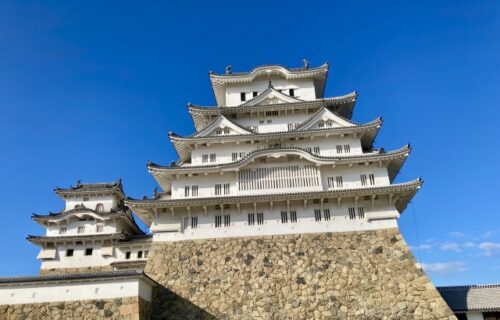
For instance, Himeji Castle, a UNESCO World Heritage site, boasts a pristine, multi-tiered wooden keep that has survived intact for over 400 years. Navigating its steep wooden staircases and observing the massive, hand-hewn wooden pillars offers a stark contrast to the modern elevators and concrete floors of Osaka Castle’s interior. Similarly, Matsumoto Castle features an authentic wooden interior that highlights the stark, militaristic reality of the Sengoku period. Furthermore, the debate surrounding wooden architecture is currently highly active at Nagoya Castle, where plans have been proposed to demolish its post-war concrete keep and meticulously reconstruct it using traditional wooden joinery techniques, reflecting a growing national desire to restore authentic wooden heritage.
The following table summarizes the key differences and architectural highlights between Osaka Castle and other premier Japanese fortresses, highlighting the distinction between modern reconstructions and surviving wooden masterpieces:
| Feature | Osaka Castle | Himeji Castle | Nagoya Castle | Matsumoto Castle |
|---|---|---|---|---|
| Appearance / Nickname | Gleaming white walls, blue-green roofs, golden embellishments; “Golden Castle” (Kinjo) | Elegant white exterior; “White Heron Castle” (Shirasagi-jo) | White exterior with prominent golden shachihoko on the roof | Striking black exterior; “Crow Castle” (Karasu-jo) |
| Keep Structure & Material | Modern reconstruction (1931) of steel and ferro-concrete | Original wooden architecture (National Treasure) | Concrete reconstruction (1959); planned traditional wooden rebuild | Original wooden architecture (National Treasure) |
| Construction Era / Original Builder | First built 1583 by Toyotomi Hideyoshi; rebuilt 1620s by Tokugawa Shogunate | Dates back to 14th century, extensively rebuilt early 17th century by Ikeda Terumasa | Built 1610-1612 by order of Tokugawa Ieyasu | Dates back to 16th century, present form early 17th century |
| Key Architectural Highlights | Massive megalithic stone walls, deep moats, surviving Edo-period wooden gates and turrets | Complex wooden defensive maze, 83 preserved rooms, brilliant white plaster walls | Golden shachihoko, masterfully restored wooden Honmaru Palace | Picturesque water moat, imposing five-tiered wooden keep, scenic Northern Alps backdrop |
| Visitor Experience | Modern museum with interactive exhibits, elevators, panoramic city views from the main tower | Traditional castle experience, historical atmosphere, exploring ancient wooden corridors | Exploring the luxurious wooden interiors of the Honmaru Palace, expansive gardens | Authentic wooden interior, steep historical staircases, display of matchlock firearms |
Conclusion
Osaka Castle stands as an unparalleled monument to Japan’s rich feudal history and the audacious vision of Toyotomi Hideyoshi. Conceived and constructed by Hideyoshi in the late 16th century, this formidable fortress was more than just a military stronghold; it was a potent symbol of his rise from humble beginnings to become the unifier of Japan during the tumultuous Sengoku period. Its original grandeur, characterized by colossal stone walls, expansive moats, and a magnificent wooden main keep adorned with gold leaf, epitomized Hideyoshi’s immense power and his ambition to create the most magnificent traditional wooden architecture in the land.
Though the original wooden masterpiece faced destruction during the Siege of Osaka and underwent subsequent reconstructions—particularly the Tokugawa Shogunate’s 17th-century wooden rebuild and the 1931 ferro-concrete restoration—its historical significance has endured. Today, it serves as a vibrant museum and a pivotal cultural heritage site. While the current main keep is a modern concrete structure, the legacy of its original wooden architecture continues to captivate historians and visitors alike. The ongoing admiration for authentic wooden castles, such as Himeji Castle and Matsumoto Castle, frequently sparks debates and dreams regarding the potential for a future authentic wooden reconstruction of Osaka Castle’s main tower to fully revive Hideyoshi’s 16th-century vision.
Ultimately, Osaka Castle is a testament to resilience, a beacon of architectural ingenuity, and a lasting embodiment of Toyotomi Hideyoshi’s enduring legacy. It continues to inspire and educate, reminding us of a pivotal era in Japanese history and the indelible mark left by one of its most influential figures, forever cementing its place as a cornerstone of Japan’s national heritage. For further exploration of its rich history, museum exhibits, and visitor information, you can explore the official Osaka Castle website.
Key Aspects of Osaka Castle and Toyotomi Hideyoshi’s Legacy
The following table summarizes the defining characteristics of Osaka Castle, contrasting its historical wooden origins with its modern status, and highlighting the enduring impact of Toyotomi Hideyoshi.
| Aspect | Description |
|---|---|
| Primary Builder | Toyotomi Hideyoshi, a pivotal figure in unifying Japan during the Sengoku period. |
| Original Architecture | A pinnacle of 16th-century Japanese wooden architecture, featuring a multi-tiered wooden main keep (tenshu) adorned with gold leaf and supported by massive stone foundations (ishigaki). |
| Symbolic Significance | A grand declaration of Hideyoshi’s power, wealth, and his ambition to rule a unified Japan from an impregnable fortress. |
| Historical Transformations | Transitioned from Hideyoshi’s original wooden marvel to a Tokugawa-era wooden reconstruction, and finally to the 1931 ferro-concrete structure seen today. |
| Modern Legacy | A prominent historical landmark and museum preserving artifacts from the Sengoku and Edo periods, while inspiring modern appreciation and debate regarding traditional Japanese wooden castle construction. |