Zen Aesthetics: Why Japanese Homes Feel Comfortable and The Design Philosophy Behind Natural Living
2026年02月12日
Discover why Japanese homes feel comfortable through Zen aesthetics. This serenity stems from Wabi Sabi, the spatial balance of Ma, and organic materials like wood and tatami. Learn how harmonizing with nature creates a peaceful sanctuary rooted in natural living.
目次
Understanding the Design Philosophy Behind Natural Living
At the heart of the Japanese home lies a profound connection to nature that goes far beyond simply placing potted plants in a room. This design philosophy is deeply rooted in the concept of Shizen (Naturalness), which views human life not as separate from nature, but as an integral part of it. In Japanese architecture, “Natural Living” implies an absence of artificiality and a deliberate intent to create spaces that foster spiritual calm and mental clarity.
Unlike many Western design trends that prioritize bold statements or rigid perfection, the Japanese approach favors Kanso (Simplicity). This principle suggests that beauty and comfort are found in the elimination of the non-essential. By stripping away clutter and decoration, the home becomes a sanctuary where the mind can rest, allowing the inhabitants to focus on the subtle beauty of the changing seasons and the flow of daily life.
The Roots of Zen in Japanese Architecture
The calming atmosphere of a traditional Japanese home can be traced directly to the influence of Zen Buddhism, which began to significantly shape Japanese culture during the Kamakura period (1185–1333). Zen teachings emphasize enlightenment through meditation and the rejection of material attachment. When applied to architecture, these spiritual values translated into a design language of austerity and restraint.
One of the most significant manifestations of this philosophy is the Chashitsu (tea house). The masters of the tea ceremony, or Chado, advocated for spaces that were rustic and humble, constructed from natural materials like bamboo, wood, and clay. This shift moved architectural prestige away from the ornate and ostentatious styles of the aristocracy toward a refined minimalism. The goal was to create an environment of Seijaku (Tranquility), where the stillness of the space could facilitate mindfulness and inner peace.
This historical evolution established the foundation for modern Japanese homes, where open floor plans, natural light, and unadorned surfaces continue to serve as a physical framework for a Zen-inspired lifestyle. For a deeper dive into these historical influences, you can explore how Zen Buddhism impacted art and architecture.
Wabi Sabi and the Appreciation of Imperfection
Perhaps the most essential, yet difficult to translate, concept in Japanese design is Wabi Sabi. It is a world view centered on the acceptance of transience and imperfection. While often used as a single term, it combines two distinct sensibilities: Wabi refers to a rustic simplicity and the elegance of humble, understated beauty, while Sabi refers to the beauty that comes with age, such as the patina on old wood or the moss on a stone.
In the context of the home, Wabi Sabi challenges the modern obsession with pristine, showroom-perfect interiors. Instead, it celebrates materials that weather and change over time. A wooden floor that creaks, a ceramic bowl with an irregular glaze, or a paper screen that softens sunlight—these are not seen as flawed, but as rich with narrative and character. This philosophy encourages residents to find comfort in the natural cycle of growth and decay.
To better understand how this differs from conventional design standards, the following table contrasts Western ideals of perfection with the Japanese Wabi Sabi aesthetic.
| Design Aspect | Western / Modern Ideal | Japanese Wabi Sabi Aesthetic |
|---|---|---|
| Symmetry | Strives for geometric perfection and balanced symmetry. | Embraces Fukinsei (asymmetry) and natural irregularity. |
| Materials | Prefers synthetic, polished, or immutable materials (plastic, stainless steel). | Favors organic, raw materials that age (wood, stone, paper). |
| Time | Values permanence; objects should look “new” forever. | Values transience; appreciates the “bloom of time” and wear. |
| Emotional Goal | Excitement, status, and visual impact. | Calm, nostalgia, and spiritual resonance. |
By embracing these imperfections, a home feels more lived-in and approachable. It removes the pressure to maintain a flawless environment, thereby reducing stress and enhancing the feeling of comfort. For more on how this concept applies to built environments, read about why architects embrace the art of imperfection.
Reasons Why Japanese Homes Feel Comfortable
The comfort experienced in a Japanese home goes beyond physical relaxation; it is deeply rooted in a psychological sense of peace known as Iyashi (healing/soothing). Unlike Western architecture, which often prioritizes privacy and insulation from the elements, traditional Japanese design focuses on the experiential quality of the space and its relationship with the surrounding environment. This unique atmosphere is achieved through deliberate spatial philosophies and an intrinsic connection to nature.
The Concept of Ma and Spatial Breathing Room
At the heart of Japanese comfort is the concept of Ma (間). Often mistranslated simply as “negative space,” Ma is more accurately described as an interval or a pause in time and space. It is not merely an empty void to be filled, but a purposeful openness that allows life to breathe. In a home, this manifests as a lack of clutter and the strategic placement of objects, creating a “breathing room” for the mind.
In Western design, there is often a tendency toward horror vacui (fear of empty space), leading to rooms filled with furniture and decor. Conversely, Japanese interiors embrace emptiness to reduce cognitive load. This minimalist approach ensures that the eye is not overwhelmed, fostering a sense of calm and clarity. For example, a Tokonoma (alcove) typically displays only one scroll or flower arrangement at a time, allowing the viewer to fully appreciate its beauty without distraction. This intentional restraint creates a sanctuary where one can detach from the chaos of the outside world.
For a deeper understanding of this philosophy, Japan House Los Angeles describes Ma as the silence between notes that makes the music meaningful, highlighting its role in creating comfortable, resonant living spaces.
Harmony with Nature Through Biophilic Design
Long before the term “biophilic design” became a buzzword in modern architecture, Japanese homes were built on the principle of coexistence with nature. This connection is not limited to placing a few potted plants in a room; it is structural and systemic. The design dissolves the rigid barrier between the indoors and outdoors, regulating humidity and light naturally while providing a constant visual connection to the changing seasons.
Several key architectural elements contribute to this harmony:
- Shakkei (Borrowed Scenery): This technique incorporates distant landscapes—such as a mountain or a neighbor’s tree—into the home’s view. By framing these elements through windows, the interior space feels expansive and connected to the wider world, preventing the feeling of confinement even in small urban homes.
- Engawa (Veranda): The Engawa is a wooden strip of flooring that runs along the perimeter of the house, acting as a transitional zone between the tatami rooms and the garden. It is neither fully inside nor outside, offering a space to sit and enjoy the breeze or sunlight while protected by the eaves.
- Tsuboniwa (Courtyard Garden): In dense cities like Kyoto, homes often feature small internal gardens called Tsuboniwa. These pocket gardens bring natural light, ventilation, and greenery into the center of the home, ensuring that nature is never far away.
The following table summarizes how these traditional elements translate into tangible comfort for residents:
| Design Element | Japanese Term | Contribution to Comfort |
|---|---|---|
| Negative Space | Ma (間) | Reduces visual noise and mental stress by creating open intervals. |
| Borrowed Scenery | Shakkei (借景) | Expands perceived space and connects the interior to distant nature. |
| Transitional Veranda | Engawa (縁側) | Provides a flexible space that blurs the line between shelter and open air. |
| Pocket Garden | Tsuboniwa (坪庭) | Introduces light and airflow into enclosed spaces, relieving claustrophobia. |
By integrating these elements, Japanese homes foster a physiological response that lowers stress levels. The use of natural materials and the visual presence of greenery align with the principles of spatial awareness and voids found in Zen philosophy, ensuring that the home remains a place of restoration.
Key Elements That Create a Natural Atmosphere
The “natural atmosphere” of a Japanese home is not merely a stylistic choice but a result of deeply intentional material selection. Unlike modern Western construction, which often prioritizes synthetic durability, traditional Japanese design embraces organic materials that breathe, age, and interact with the senses. This tactile connection to nature is what gives these spaces their distinctively calming and grounded character.
The Warmth of Wood and Tatami Mats
Wood is the soul of Japanese architecture. Rather than painting or sealing timber to hide its grain, Japanese builders traditionally prefer Shiraki—plain, untreated wood that retains its natural texture and scent. Hinoki (Japanese cypress) and Sugi (Japanese cedar) are particularly prized for their aromatic properties and fine grain. Research suggests that the presence of natural wood in an interior can significantly lower physiological stress responses, such as heart rate and blood pressure, creating a biological basis for the feeling of comfort.
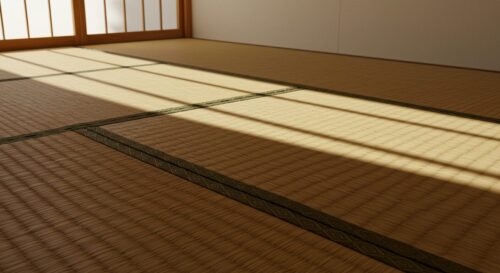
Complementing the wooden structure is the Tatami mat, a flooring material unique to Japan. Composed of a compressed rice straw core covered with woven soft rush grass (Igusa), Tatami offers a sensory experience that hard flooring cannot match. It is soft underfoot, absorbing sound to create a hushed environment, and it naturally regulates indoor humidity by absorbing moisture during Japan’s humid summers and releasing it in dry winters. The distinct, grassy aroma of fresh Tatami is often cited by residents as a primary trigger for relaxation.
| Material | Primary Component | Sensory Characteristic | Role in “Natural Living” |
|---|---|---|---|
| Hinoki (Cypress) | Untreated timber | Lemon-like scent, warm to the touch | Structural beauty and stress reduction through phytoncides. |
| Tatami | Woven Igusa rush | Soft cushioning, grassy aroma | Humidity control and sound absorption for a quiet atmosphere. |
| Tsuchikabe | Earth/Clay & Straw | Matte texture, earthy tones | Regulates temperature and adds organic visual depth. |
Shoji Screens and the Softness of Light
While Western windows often seek to capture a view, Japanese Shoji screens seek to capture light itself. Constructed from a lattice of lightweight wood (Kumiko) and covered with translucent Washi paper, Shoji screens function as a sophisticated light diffuser. They filter harsh, direct sunlight into a soft, uniform glow that fills the room without casting deep shadows. This creates a visual softness that blurs the hard edges of furniture and architecture, contributing to a serene ambiance.
The use of Washi paper allows for a dynamic relationship with the outside world. Unlike glass, which is transparent, or heavy curtains, which are opaque, Shoji provides privacy while maintaining a connection to nature’s rhythms. The paper is thin enough to reveal the movement of swaying trees or the changing colors of dusk, allowing the inhabitants to sense the time of day and the season without being fully exposed to the elements. This play of light and shadow is central to the aesthetic of physiological relaxation found in traditional homes.
Integrating Zen Aesthetics into Daily Life
Bringing the comfort of a Japanese home into your own space does not require a complete architectural renovation. Instead, it involves adopting specific mindsets and design principles that prioritize harmony, simplicity, and a connection to nature. By integrating these Zen aesthetics, you can transform any dwelling into a sanctuary of calm.
Embracing Kanso: The Art of Simplicity and Decluttering
At the heart of a comfortable Japanese home is the principle of Kanso (simplicity). This concept goes beyond mere minimalism; it is about eliminating the non-essential to allow the essential to speak. In a modern context, this means curating your belongings so that every object has a purpose or brings joy.
To practice Kanso, focus on clearing visual noise. Open surfaces should remain largely empty, allowing the eye to rest rather than darting between cluttered items. Storage solutions should be concealed where possible, mimicking the clean lines of traditional sliding cabinets. This reduction in physical clutter directly correlates to a reduction in mental clutter, fostering the serene atmosphere typical of Japanese interiors.
For a deeper understanding of these design principles, Shibumi Design Studios outlines how concepts like Kanso and Shibumi (understated beauty) function as the backbone of Zen aesthetics.
Creating a Transition Zone: The Genkan Concept
One of the most functional and symbolic elements of a Japanese home is the Genkan, the sunken entryway where shoes are removed. This area serves as a physical and psychological boundary between the outside world and the private sanctuary of the home. It signifies leaving the dirt, stress, and chaos of the day at the door.
Even without a sunken floor, you can recreate this ritual in a Western home:
- Define the Space: Use a distinct rug or a change in flooring material to mark the “clean” zone.
- Shoe Storage: Install a dedicated shoe cabinet or bench to ensure footwear is hidden away, keeping the entry pristine.
- The Ritual: Adopt the habit of removing shoes immediately upon entry. This simple act shifts your mindset from “active” to “rest” mode.
Incorporating Natural Materials and Earthy Tones
To achieve the “natural living” feel, synthetic materials should be replaced or covered with organic alternatives. Japanese design leans heavily on Shizen (naturalness), utilizing materials that age gracefully and connect residents to the earth. The color palette should be subdued—think moss greens, warm beiges, stone grays, and unbleached whites.
The following table outlines actionable swaps to bring this aesthetic into your home:
| Category | Standard Western Element | Zen-Inspired Alternative | Atmospheric Benefit |
|---|---|---|---|
| Textiles | Polyester blends, heavy drapes | Linen, organic cotton, bamboo blinds | Adds breathability and texture; filters light softly. |
| Flooring | Wall-to-wall synthetic carpet | Hardwood, cork, or Tatami rugs | Provides grounding tactile feedback and an earthy scent. |
| Decor | Plastic ornaments, bright prints | Ceramics, stone, unpainted wood | Evokes Wabi Sabi by celebrating imperfect, organic forms. |
| Greenery | Artificial plants | Bonsai, Kokedama, or single-stem vases | Brings living energy (Qi) into the space. |
Lowering the Sightline: Floor Culture and Furniture
A subtle but powerful way to change the feel of a room is to lower the center of gravity. Traditional Japanese life takes place largely on the floor, which alters one’s perspective and makes ceilings feel higher and spaces more expansive.
You can incorporate this “floor culture” by choosing low-profile furniture. Opt for a platform bed, low coffee tables, or floor cushions (Zabuton) instead of high sofas. This grounding effect promotes a sense of stability and relaxation. According to the Kyoto Visitor’s Guide, the lifestyle of living on the floor nurtures an awareness of nature and allows for flexible, multi-purpose use of a single room.
Mindful Lighting and Sensory Elements
The harsh glare of overhead fluorescent lighting is antithetical to Zen comfort. Japanese homes often utilize Shoji screens to diffuse sunlight into a soft, glowing wash. To mimic this, avoid direct, bright lights. Instead, layer your lighting with floor lamps, paper lanterns, or dimmable warm-toned bulbs that create pockets of shadow and depth.
Finally, engage the non-visual senses. The scent of Igusa grass (from Tatami), Hinoki wood, or subtle incense can instantly trigger a relaxation response. The sound of a small indoor water feature or simply the quiet achieved by sound-absorbing textiles can complete the transformation of your home into a place of restoration.
Embracing the Essence of Japanese Design for a Life of Comfort
The Psychological Harmony of Natural Living
| Design Philosophy | Focus & Approach | Impact on Comfort |
|---|---|---|
| Western Modernism | Often emphasizes symmetry, filling voids with decor, and maximizing distinct functional areas. | Can lead to visual clutter and “decision fatigue,” potentially reducing mental relaxation. |
| Japanese Zen Aesthetic | Prioritizes asymmetry, Ma (negative space), and the fluidity between indoors and outdoors. | Promotes mental clarity, mindfulness, and a sense of freedom within the home. |
| Wabi Sabi Influence | Accepts and celebrates imperfection, aging, and natural wear. | Creates a “lived-in” warmth that removes the pressure of maintaining a pristine environment. |