Discover Kyo-Machiya Style: The Charm of Kyoto’s Traditional Wooden Architecture
2026年01月22日
Discover the essence of Kyo-Machiya, Kyoto’s traditional wooden townhouses. Learn how the “eel bed” layout and tsuboniwa gardens blend nature with architecture. You will understand why preserving these historic homes is vital for Japan’s cultural legacy.
目次
Defining the Kyo-Machiya Style
The term Kyo-Machiya refers specifically to the traditional wooden townhouses found in the historic center of Kyoto, Japan. Unlike general Japanese residential architecture, a Kyo-Machiya is defined by a strict set of structural and historical criteria. Officially, the City of Kyoto defines these structures as wooden buildings constructed before 1950 using traditional construction methods. These architectural gems are not merely places of residence but are living artifacts that embody the wisdom, aesthetics, and lifestyle of Kyoto’s merchants and artisans over centuries.
At the core of the Kyo-Machiya style is the construction technique known as Kigumi, a method of interlocking wooden joints without the use of iron nails. This flexibility allows the structure to withstand Japan’s frequent earthquakes. Furthermore, these houses are typically built on stone foundations rather than concrete, a style called Ishibadate, which prevents moisture from rising into the timber. The preservation of these definitions is crucial for maintaining the historical integrity of Kyoto’s cityscape.
| Criterion | Description | Architectural Significance |
|---|---|---|
| Construction Date | Built prior to 1950 (specifically before the Building Standards Act of 1950). | Ensures the building predates modern industrial construction regulations. |
| Construction Method | Traditional Wooden Post-and-Beam (Jiku-gumi). | Relies on joinery rather than metal hardware, allowing for structural flexibility. |
| Foundation | Ishibadate (Stone foundation). | The pillars rest on natural stones, allowing the house to “shift” during tremors. |
| Walls | Bamboo lattice coated with earth (Tsuchikabe). | Provides natural humidity regulation and fire resistance essential for Kyoto’s climate. |
Origins of Kyoto Traditional Wooden Architecture
The origins of Kyo-Machiya can be traced back to the Heian period (794–1185), coinciding with the establishment of Kyoto (Heian-kyo) as the imperial capital. However, the architectural style recognized today largely solidified during the Edo period (1603–1867) and the Meiji period (1868–1912). The layout of Kyoto was designed on a grid system modeled after the ancient Chinese capital of Chang’an, which necessitated narrow frontages for tax purposes, heavily influencing the architectural evolution of these townhouses.
Throughout history, Kyoto was devastated by numerous fires, most notably the Great Fire of Tenmei (1788) and the Hamaguri Gomon Incident (1864). Consequently, very few Machiya existing today date back further than the mid-19th century. The surviving structures represent the pinnacle of fire-preventative urban design from that era, incorporating plaster walls and tiled roofs to mitigate the spread of flames. The evolution of the Kyo-Machiya is a testament to the resilience of Kyoto’s citizens, who rebuilt their city repeatedly while refining their architectural techniques to suit the dense urban environment.
The Meaning of Machiya in Japanese Culture
The word Machiya is a compound of two Japanese characters: machi (town) and ya (house or shop). In the context of Japanese culture, it signifies a “merchant’s townhouse” that serves a dual purpose. Historically, these buildings were the physical manifestation of the concept shoku-ju ittai, meaning the integration of workplace and residence. The front of the house typically functioned as a shop or gallery for commerce, while the rear rooms served as the private living quarters for the family.
This architectural typology fostered a unique community dynamic. The Machiya is not an isolated unit but part of a collective row of houses sharing eaves and walls, creating a strong sense of neighborhood cooperation known as muko-sangen ryo-donari (referring to one’s three neighbors across the street and two on either side). Culturally, the Machiya represents a boundary between the public (omote) and the private (oku). As one moves deeper into the house, the space transitions from the bustling energy of the street to the serene silence of the inner garden, reflecting the Japanese value of harmony between social obligation and private life.
For more detailed definitions and preservation efforts, you can refer to the Kyoto Center for Community Collaboration (Machiya Support Center), which offers extensive resources on the certification and restoration of these historic properties.
Distinctive Architectural Features of Kyo-Machiya
The architectural ingenuity of Kyo-Machiya (Kyoto townhouses) lies in their ability to combine functionality with understated beauty. Evolving over a thousand years in a dense urban environment, these structures were designed to maximize space, ensure privacy, and mitigate the extreme humidity of Kyoto’s basin climate. Every element, from the layout of the rooms to the shape of the windows, serves a specific purpose in this traditional system of living.
The Eel Bed Layout or Unagi no Nedoko
One of the most defining characteristics of a Kyo-Machiya is its long, narrow footprint, affectionately known as Unagi no Nedoko (the bed of an eel). This unique layout originated in the Edo period, when property taxes were calculated based on the width of the street frontage rather than the total area of the plot. To minimize taxes while maximizing living and working space, merchants built houses with narrow facades—sometimes as little as four meters—that extended deeply back into the city block, often reaching depths of 40 meters.
The interior structure is typically divided into two distinct zones running parallel to each other:
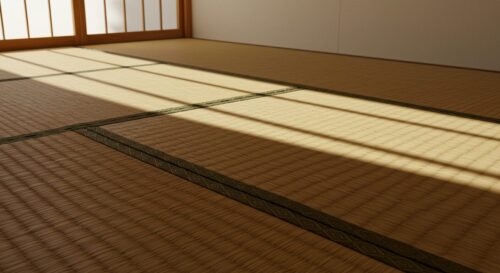
- The Kyoshitsu-bu (Living Quarters): A line of raised tatami-matted rooms. The layout progresses from the public Mise-no-ma (shop space) at the front, to the semi-private Naka-no-ma (living room), and finally to the private Oku-no-ma (inner room) at the rear, where the family slept or entertained honored guests.
- The Toriniwa (Earthen Passage): An unfloored earthen corridor that runs the entire length of the house from the front entrance to the storehouse (Kura) in the back. This passage contains the kitchen (Okudo-san) and features high open ceilings with exposed beams, known as Hibukuro, which allow smoke and heat to escape through skylights.
Tsuboniwa Courtyard Gardens for Light and Air
Located deep within the long, narrow structure, the Tsuboniwa is a small courtyard garden that serves as the lungs of the house. While aesthetically pleasing, offering a glimpse of nature with stone lanterns, moss, and shade-tolerant plants, its primary function is environmental control.
In the stifling heat of a Kyoto summer, the Tsuboniwa facilitates natural ventilation through a passive cooling mechanism. The open space creates a temperature differential between the cool, shaded earth of the garden and the warmer interior rooms. This generates a gentle updraft (chimney effect) that pulls fresh air through the front lattice and out through the high roof of the garden or the Hibukuro. Additionally, these pocket gardens act as light wells, bringing essential natural light into the windowless center of the deep house.
Mushiko Mado Windows and Lattice Work
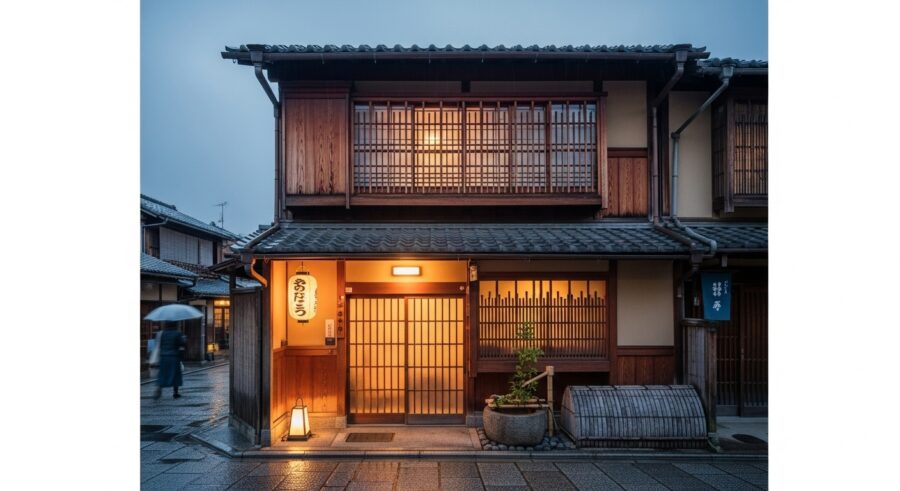
The façade of a Kyo-Machiya is instantly recognizable by its intricate wooden latticework and unique second-story windows. These features were designed to balance the merchant’s need for security and privacy with the necessity of inviting customers in.
The Function of Koshi (Lattice)
The wooden lattice, or Koshi, covers the front of the first floor. It is constructed to allow those inside to see out clearly while preventing passersby from seeing in, acting as a one-way screen. Historically, the style of the lattice indicated the type of trade practiced within. For example, a textile shop would have a different grid pattern than a rice merchant or a sake brewer.
| Lattice Style (Koshi) | Associated Trade | Design Characteristics |
|---|---|---|
| Itoya-goshi | Textile / Thread Shop | Features a wide gap between the top sections of the slats to allow natural light to illuminate the colorful threads and fabrics. |
| Komeya-goshi | Rice Merchant | Thick, sturdy slats with narrow gaps, designed to be robust and secure for storing heavy sacks of grain. |
| Sakaya-goshi | Sake Brewer | Highly durable with thick vertical and horizontal bars, often built to protect the valuable inventory of the brewery. |
| Fuyagoshi | Gluten/Tofu Shop | Vertical slats are widely spaced to facilitate ventilation, crucial for businesses that use fire and steam. |
Mushiko Mado (Insect Cage Windows)
On the second story, particularly in lower-ceilinged mezzanine levels known as Tsushi-nikai, you will find Mushiko Mado. These are slit-like windows plastered with earth and lime, resembling the bamboo cages used for keeping insects (mushi). The heavy plastering makes them fire-resistant, a critical feature in a city that historically suffered from devastating fires. They allow for ventilation while maintaining a high level of privacy for the low-ceilinged storage or sleeping quarters above.
For more detailed information on visiting these architectural treasures, you can consult the Kyoto City Official Travel Guide. Additionally, organizations like the Kyoto Center for Community Collaboration work actively to preserve these historic structures.
Living in Harmony with Nature
The ingenuity of Kyo-Machiya architecture lies in its ability to adapt to Kyoto’s distinct climate, particularly the stifling humidity and heat of the summer months. Rather than fighting the elements, these traditional townhouses are designed to breathe, utilizing passive cooling techniques and natural materials to create a comfortable living environment that respects the seasons.
Ventilation Techniques for Kyoto Summers
Kyoto is geographically located in a basin, causing heat to linger and creating famously oppressive summers. To combat this, Kyo-Machiya builders developed sophisticated natural ventilation systems that function without modern electricity.
The primary engine for air circulation is the Hibukuro (firebox), a high, open-ceiling space located above the kitchen area in the Tori-niwa (earthen passage). This architectural feature acts as a thermal chimney. As hot air rises and escapes through the smoke windows or skylights at the top of the Hibukuro, it creates a vacuum effect that pulls fresh, cooler air in from the street level and the rear garden. This continuous airflow, known as the “stack effect,” keeps the interior significantly cooler than the outside temperature.
| Feature | Function | Climatic Benefit |
|---|---|---|
| Hibukuro (Firebox) | High open ceiling above the kitchen | Acts as a chimney to exhaust hot air and smoke, drawing in fresh air. |
| Tori-niwa (Earthen Passage) | Unfloored corridor running front to back | Creates a wind tunnel effect that accelerates airflow through the house. |
| Uchimizu (Water Sprinkling) | Ritual of sprinkling water in the garden | Evaporative cooling lowers the temperature of the ground and air. |
Furthermore, the layout facilitates a horizontal breeze. The long, narrow Tori-niwa serves as a wind tunnel, channeling air from the front entrance through to the rear Tsuboniwa garden. In the summer, residents often replace solid sliding doors (fusuma) with summer fittings called sudare (bamboo blinds) or yoshizu (reed screens). These porous barriers block harsh sunlight while allowing the breeze to pass freely through the rooms, a practice known as Tategu-gae (seasonal changing of fittings).
Natural Materials and Earthen Walls
The materials used to construct a Kyo-Machiya are not merely structural; they are active participants in regulating the indoor environment. The most critical component is the traditional earthen wall, or Tsuchikabe.
These walls are constructed using a bamboo lattice framework (komai) layered with a mixture of clay, straw, and water. A specific and highly prized type of soil often used in high-end Machiya is Juraku soil, historically sourced from the site of the Jurakudai palace. This earth is renowned for its fine texture and superior hygroscopic properties.
The “breathing” capability of these materials is essential for humidity control:
- Moisture Buffering: During Kyoto’s humid summers, the earthen walls and tatami mats absorb excess moisture from the air, preventing mold and reducing the “sticky” feeling of the heat. Conversely, in the dry winter, they release stored moisture back into the air.
- Thermal Mass: The thick earthen walls provide thermal insulation, keeping the interior cool during the day by absorbing heat slowly and releasing it at night.
- Timber Construction: The structural wood, typically pine, cedar, or cypress, continues to expand and contract with the seasons, maintaining the structural integrity of the house while contributing to the regulation of air quality.
This reliance on permeable, natural materials ensures that a Kyo-Machiya is not a hermetically sealed box, but a living entity that harmonizes with the surrounding nature to protect its inhabitants.
Modern Preservation and Renovation
Transforming Townhouses into Accommodations
| Utilization Type | Primary Benefit | Renovation Focus |
|---|---|---|
| Private Residence | Preserves community fabric and lifestyle | Comfort, insulation, and seismic retrofitting for long-term living |
| Machiya Stay (Lodging) | Generates revenue to offset maintenance costs | Modern amenities (kitchens, baths) while keeping visual authenticity |
| Commercial Space (Cafe/Shop) | Public access to cultural heritage | Structural reinforcement for high foot traffic and facade preservation |
Challenges in Protecting Historic Cityscapes
Conclusion
The Kyo-Machiya represents far more than just a traditional architectural style; it is the physical embodiment of Kyoto’s history, culture, and the wisdom of living in harmony with nature. These wooden townhouses, characterized by their deep “Unagi no Nedoko” layouts and serene “Tsuboniwa” courtyards, have defined the urban landscape of Kyoto for centuries. They stand as a testament to the ingenuity of Kyoto’s merchants and artisans, who crafted living spaces that were both functional for business and resilient against the city’s distinct seasonal extremes.
As we have explored, the architectural features such as Mushiko Mado windows and earthen walls are not merely aesthetic choices but are sophisticated solutions for ventilation and humidity control. However, the survival of these historic structures faces significant challenges in the modern era. The balance between preserving the authentic cityscape and meeting contemporary safety and comfort standards is delicate. Fortunately, a growing movement towards renovation and adaptive reuse is breathing new life into these cultural assets, transforming them into accommodations, cafes, and cultural centers that allow visitors to experience the “Machiya” lifestyle firsthand.
The Future of Kyo-Machiya and Sustainable Tourism
The preservation of Kyo-Machiya is intrinsically linked to the concept of sustainable tourism. By repurposing these structures, the city not only protects its architectural heritage but also promotes a circular economy that values existing resources over new construction. Travelers play a crucial role in this ecosystem; choosing to stay in a Machiya or patronizing businesses housed in these traditional buildings directly contributes to the funds required for their maintenance and restoration.
Various initiatives led by the Kyoto Center for Community Collaboration and local preservation groups are working tirelessly to certify and support the restoration of these properties. Understanding the different ways these buildings are utilized today helps in appreciating their evolving role in Kyoto’s society.
| Utilization Type | Description | Cultural Impact |
|---|---|---|
| Kyo-Machiya Stay | Renovated townhouses rented as private vacation homes or ryokans. | Allows guests to experience the traditional lifestyle, including the layout and garden aesthetics, from the inside. |
| Commercial Reuse | Conversion into cafes, restaurants, or artisanal shops. | Keeps the building accessible to the public while maintaining its economic viability and exterior appearance. |
| Cultural Facilities | Museums, galleries, or community centers. | Preserves the structure strictly for educational purposes, often displaying historical artifacts and architectural techniques. |
Preserving the Soul of the City
Ultimately, the Kyo-Machiya is the soul of Kyoto’s streetscape. Its preservation is not just about saving old wood and clay; it is about safeguarding the community spirit and the aesthetic identity of Japan’s ancient capital. As modernization continues, the conscious effort to integrate these traditional wooden structures into the contemporary urban fabric ensures that the legacy of the Kyo-Machiya will endure. For those visiting Kyoto, engaging with these buildings offers a profound connection to the past and a meaningful way to support the future of this unique architectural heritage.
For more information on tourism and responsible travel in Kyoto, you can visit the official guide by the Kyoto City Tourism Association.