Exploring Kiyomizu-dera Architecture: A Masterpiece of Japanese Engineering
2025年12月25日
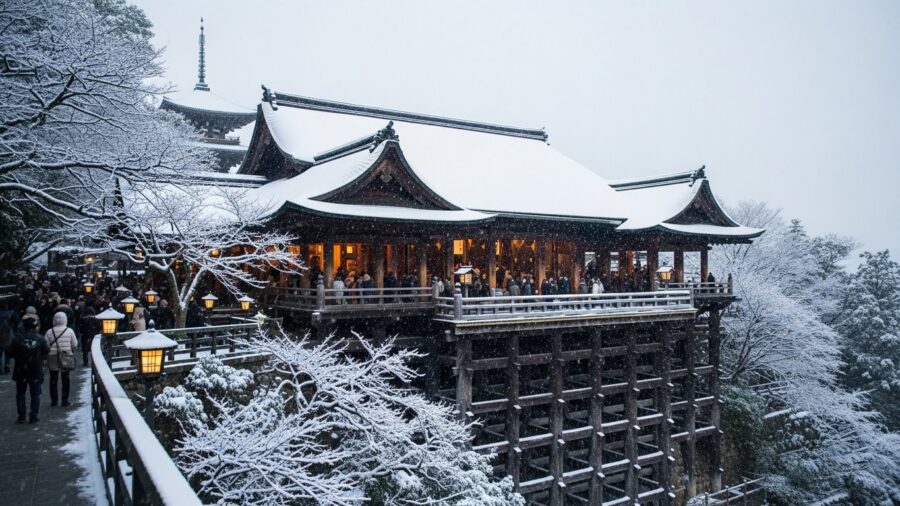
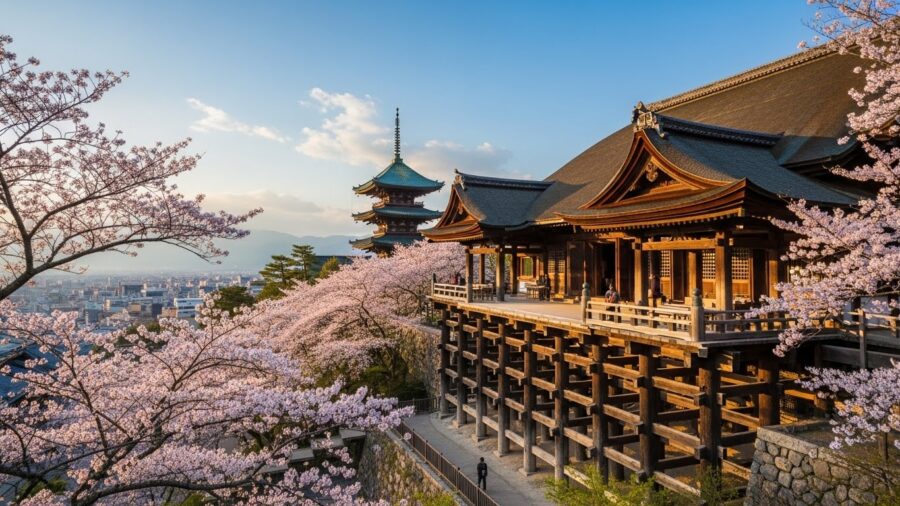
Perched on the hills of Eastern Kyoto, Kiyomizu-dera stands not only as a spiritual sanctuary but as a monumental testament to the ingenuity of traditional Japanese architecture. In this detailed exploration of the temple’s structural mastery, readers will gain a profound understanding of how this UNESCO World Heritage Site was constructed without the use of a single nail, relying instead on the sophisticated joinery technique known as Kigumi. We will dissect the engineering marvel behind the iconic wooden stage, or “Butai,” which projects boldly over the hillside using the Kakezukuri suspension method, supported by massive 400-year-old Keyaki (Japanese Zelkova) pillars. Beyond the famous stage, this guide illuminates the design principles of the National Treasure Main Hall (Hondo) and the vibrant Three-Storied Pagoda, highlighting the aesthetic and functional roles of traditional materials like Hinoki (Japanese Cypress) bark roofing. Ultimately, you will discover that the secret to Kiyomizu-dera’s resilience through centuries of earthquakes lies in its flexible, interlocking wooden framework, a masterpiece of ancient engineering that balances immense weight with graceful aesthetics.
目次
The Historical Significance of Kiyomizu-dera’s Design
From Humble Origins to Imperial Patronage
The Great Reconstruction of 1633
Chronology of Architectural Evolution
| Era / Year | Event | Impact on Design & Architecture |
|---|---|---|
| Nara Period (778) | Founding by Enchin Shonin | Establishment of the sacred site around the Otowa Waterfall, dictating the challenging topography for future building. |
| Heian Period (798) | Patronage by Sakanoue no Tamuramaro | Construction of the original large-scale halls, introducing aristocratic architectural elements. |
| Warring States Period (1469) | Destruction during the Onin War | Loss of many original structures, leading to a period of decline and temporary repairs. |
| Edo Period (1633) | Reconstruction by Tokugawa Iemitsu | Rebuilding of the Main Hall, Stage, and Pagoda in their current form, utilizing advanced Edo-period carpentry and Momoyama aesthetics. |
| Modern Era (1994) | UNESCO World Heritage Registration | Recognition as a “Historic Monument of Ancient Kyoto,” ensuring strict preservation of the architectural landscape. |
A Symbol of Resilience and Spiritual Permanence
The Engineering Marvel of the Kiyomizu Stage
Understanding Kakezukuri Construction
The Secret of Nail-less Joinery (Kigumi)
- Nuki (Penetrating Tie Beams): Horizontal beams pass directly through the vertical pillars rather than just resting on top of them. This creates a highly stable joint that resists lateral forces.
- Kusabi (Wedges): To lock the beams in place, wooden wedges are hammered into the joints. These wedges tighten the connection and can be retightened during maintenance if the wood shrinks over time.
The Role of Massive Keyaki Pillars
| Component | Material | Specifications | Engineering Function |
|---|---|---|---|
| Support Pillars | Keyaki (Japanese Zelkova) | 139 pillars, up to 12m high, approx. 2m circumference | Provides primary vertical support; resistant to rot and heavy loads. |
| Horizontal Beams | Keyaki & Structural Timber | Interlocking “Nuki” system | Connects pillars to form a lattice; resists lateral forces without nails. |
| Stage Flooring | Hinoki (Japanese Cypress) | Over 410 boards, 2-2.5 inches thick | Durable surface for foot traffic; laid with a slight slope for rain drainage. |
| Foundation | Natural Stone | Stone bases (Soseki) | Isolates wood from ground moisture to prevent rotting. |
Architectural Highlights of the Temple Complex
The National Treasure Hondo (Main Hall)
The Three-Storied Pagoda (Sanju-no-to)
Other Notable Structures: Gates and Halls
| Structure Name | Architectural Features & Significance | Key Details |
|---|---|---|
| Nio-mon Gate (Deva Gate) |
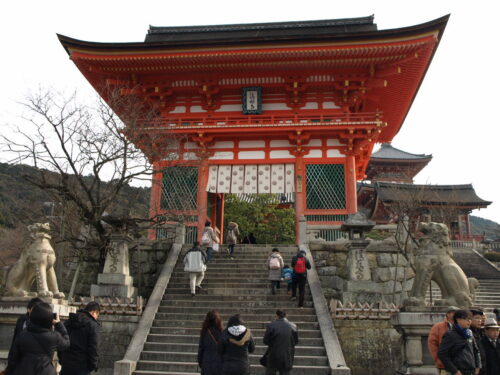
The main entrance to the temple, also known as Aka-mon (“Red Gate”). This two-story gate is flanked by two formidable Nio (Benevolent Kings) statues and stone komainu (lion-dogs), symbolizing protection of the sacred grounds. | Reconstructed c. 1500; refurbished in 2003. Dimensions: approx. 14m high, 10m wide. |
| Sai-mon (West Gate) |
Considered a gateway to Paradise, this gate offers spectacular sunset views. It is a known site for Nissokan, a meditation practice that involves visualizing the Pure Land through the setting sun. | Reconstructed in 1633. Designated as a National Treasure. |
| Zuigu-do Hall | Houses the Daizuigu Bodhisattva and deities for matchmaking and safe birth. It features the “Tainai meguri,” a pitch-dark tunnel walk symbolizing a return to the womb and spiritual rebirth. | Reconstructed in 1718 (mid-Edo period). |
| Okuno-in Hall | Situated directly above the Otowa Waterfall, this hall resembles a smaller version of the Main Hall and features its own nail-free kakezukuri stage. It offers one of the best vantage points for viewing the Main Hall and the city. | Rebuilt in 1633. Enshrines a seated Kannon Bosatsu statue. |
| Koyasu Pagoda | A three-storied pagoda located in the southern ravine, renowned for its association with safe childbirth. Its placement allows it to be seen clearly from the Kiyomizu Stage. | Built between 1607 and 1633. Exemplifies Momoyama architecture. |
Traditional Materials: The Legacy of Hinoki and Keyaki
The architectural longevity of Kiyomizu-dera is not solely due to its structural design but is deeply rooted in the strategic selection of timber. Traditional Japanese architecture relies on a profound understanding of wood properties, assigning specific species to roles where their natural characteristics can be maximized. In the case of Kiyomizu-dera, the interplay between Keyaki (Japanese Zelkova) and Hinoki (Japanese Cypress) creates a balance of strength and resilience that has allowed the temple to withstand centuries of weathering and seismic activity.
The Structural Backbone: Keyaki (Japanese Zelkova)
For the massive pillars that support the Kiyomizu Stage, carpenters selected Keyaki, a wood renowned in Japan as the “King of Hardwoods.” Keyaki is distinguished by its exceptional density, weight, and load-bearing capacity, making it the ideal material for the Kakezukuri (overhang) structure which must support the immense weight of the main hall and the crowds of visitors.
The 139 pillars supporting the stage were crafted from Keyaki trees estimated to be around 400 years old at the time of harvest. The grain of Keyaki is not only aesthetically beautiful but also structurally superior, offering high resistance to compression. However, working with Keyaki presents challenges; it is a hard wood that can be difficult to chisel and is prone to warping if not dried correctly. The master carpenters of the Edo period understood that by using seasoned Keyaki for the vertical columns, they could ensure the structural integrity of the temple for centuries. These pillars are designed to be durable enough to last approximately 400 to 800 years, aligning with the age of the trees when they were cut.
The Resilient Shield: Hinoki (Japanese Cypress)
While Keyaki provides the skeleton, Hinoki is used for the elements most exposed to the elements: the stage flooring and the roof. Hinoki is celebrated for its straight grain, ease of processing, and, most importantly, its high oil content. This natural oil grants the wood excellent water resistance and rot resistance, which is critical for the open-air stage that endures Kyoto’s humid summers and rainy seasons.
The stage floor consists of over 400 Hinoki boards. These boards are known as “Butai-ita” and are laid with a specific thickness to withstand foot traffic while utilizing the wood’s natural elasticity to absorb shock. Furthermore, the roof of the Main Hall utilizes Hiwadabuki, a traditional technique using layers of Hinoki bark. This roofing method is lightweight, reducing the load on the supporting pillars during earthquakes, and provides excellent insulation. Unlike the structural Keyaki pillars, the Hinoki flooring is considered a consumable part of the structure and is replaced every 30 to 40 years to maintain safety and aesthetics.
Sustainability and the Cycle of Forest Regeneration
The maintenance of Kiyomizu-dera operates on a timescale that spans centuries. Recognizing that the massive Keyaki pillars will eventually need replacement, the temple has embarked on a long-term forest regeneration project. The philosophy guiding this initiative is simple yet profound: if you harvest a 400-year-old tree for construction, you must plant a sapling and nurture it for 400 years to provide materials for future generations.
Kiyomizu-dera has acquired mountain forests in Kyoto and surrounding areas to plant Keyaki and Hinoki specifically for future restoration work. This foresight ensures that when the current pillars reach the end of their lifespan—centuries from now—there will be timber of sufficient size and quality available to replace them. This cyclical approach to resources connects the architecture directly to the natural environment, treating the temple not as a static object but as a living entity that evolves with the forest.
| Material | Primary Use in Kiyomizu-dera | Key Characteristics | Maintenance Cycle |
|---|---|---|---|
| Keyaki (Zelkova) | Main structural pillars (Kiyomizu Stage support) | High density, extreme hardness, dynamic grain, high load-bearing capacity. | Designed to last 400–800 years (matches the age of the tree at harvest). |
| Hinoki (Cypress) | Stage flooring, Roof bark (Hiwadabuki) | Water resistant, rot resistant, aromatic, straight grain, lightweight. | Flooring is replaced approx. every 30–40 years; Roof bark is re-layered periodically. |
For further insights into the preservation of these wooden cultural properties, you can refer to the Kiyomizu-dera Official Website.
Conclusion
Kiyomizu-dera Temple stands as an enduring testament to traditional Japanese architectural ingenuity and spiritual devotion, captivating visitors with its unique construction and profound historical significance. Recognized as a UNESCO World Heritage site, it embodies centuries of masterful craftsmanship and resilient preservation efforts in Kyoto’s scenic Higashiyama district.
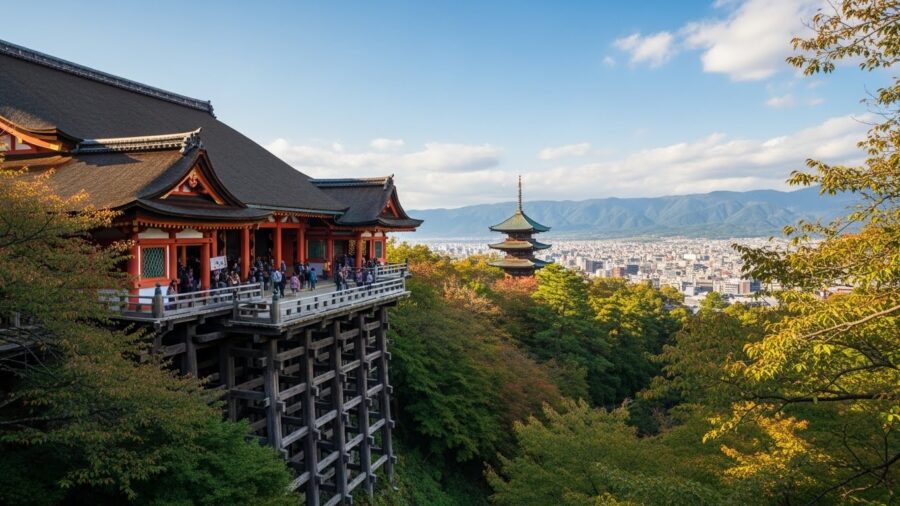
The temple’s most celebrated feature, the Kiyomizu Stage, is a remarkable feat of engineering. This grand wooden veranda, extending from the Hondo (Main Hall), is famously built using the kakezukuri (overhang) method, entirely without the use of a single nail or metal fastener. Instead, a sophisticated system of intricate wooden joinery, known as kigumi or tsugite, allows the structure to interlock and withstand the test of time, including natural disasters like earthquakes. Supported by 139 sturdy wooden columns, many crafted from 400-year-old Keyaki (Japanese Zelkova) trees, the stage rises approximately 13 meters high, offering panoramic views of Kyoto.
Beyond the iconic stage, Kiyomizu-dera encompasses a rich array of architectural marvels. The Hondo itself, a designated National Treasure, reflects the Hiyokezukuri style, characterized by its spacious and open design, and enshrines the temple’s principal deity, the Eleven-faced, Thousand-armed Kannon Bodhisattva. The vibrant vermilion Sanju-no-to (Three-Storied Pagoda), standing at about 31 meters, is among Japan’s tallest and most visually striking pagodas, its original Edo period colors meticulously restored.
The materials employed, primarily Hinoki (Japanese Cypress) for flooring and roofing, and Keyaki for structural pillars, are chosen for their exceptional durability, aesthetic beauty, and natural resistance to decay, reflecting a deep respect for natural resources. This meticulous selection, combined with the unparalleled skill of traditional Japanese carpenters, has allowed Kiyomizu-dera to endure numerous fires and reconstructions since its founding in 778 AD, with most of the current buildings dating back to a significant rebuilding effort in 1633.
Kiyomizu-dera’s architectural legacy is actively safeguarded through ongoing preservation initiatives, including the planting of new Keyaki trees to ensure future generations can continue these traditional reconstruction methods. As a living monument, it not only showcases the pinnacle of ancient Japanese woodworking and structural engineering but also serves as a profound cultural and spiritual landmark, inviting visitors to connect with centuries of history, artistry, and the serene beauty of Kyoto. Its architectural brilliance remains a source of inspiration and a testament to human ingenuity in harmony with nature.
Key Architectural Highlights of Kiyomizu-dera Temple
| Architectural Feature | Key Characteristics | Construction Method/Materials |
|---|---|---|
| Kiyomizu Stage | Iconic wooden veranda offering panoramic views of Kyoto; a symbol of making a bold decision. | Kakezukuri (overhang style); built without nails using intricate wooden joinery; supported by 139 large Keyaki (Japanese Zelkova) pillars, approximately 13 meters high. |
| Hondo (Main Hall) | Central building housing the temple’s main deity, the Eleven-faced, Thousand-armed Kannon. | Hiyokezukuri style, known for its spacious and open design; integrated with the Kiyomizu Stage. |
| Sanju-no-to (Three-Storied Pagoda) | One of Japan’s tallest three-storied pagodas, known for its vibrant vermilion color. | Traditional Japanese pagoda architecture; current structure reconstructed in 1632 during the Edo period; stands approximately 31 meters tall. |
For more detailed information, please visit the Official Kiyomizu-dera Temple website or explore its designation as part of the Historic Monuments of Ancient Kyoto on the UNESCO World Heritage Centre website.