The Architectural Masterpiece of Kiyomizu-dera Temple: A Guide to Kyoto’s Iconic Landmark
2026年02月19日
Explore the architecture of Kiyomizu-dera, Kyoto’s UNESCO World Heritage site. Learn how the iconic wooden stage was engineered without nails using ancient joinery. This guide reveals the structural secrets and history of this Mount Otowa masterpiece.
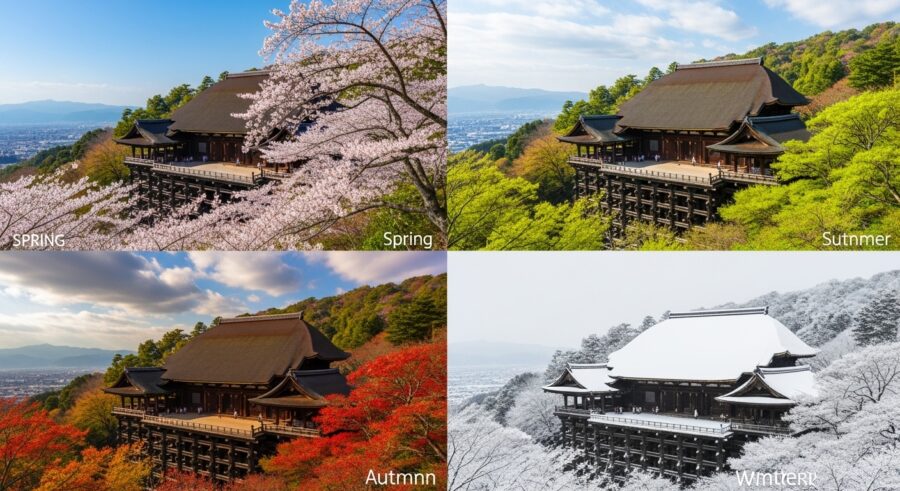
Introduction to Kiyomizu-dera Temple’s Unique Architecture
Kiyomizu-dera Temple, located in the historic Higashiyama district of Kyoto, is not merely a place of worship but an architectural marvel that showcases the pinnacle of traditional Japanese construction. Designated as a UNESCO World Heritage Site in 1994 as part of the “Historic Monuments of Ancient Kyoto,” the temple reflects centuries of craftsmanship and a deep understanding of natural forces. Its distinctive design, which has withstood earthquakes and the elements for centuries, is renowned globally for its structural integrity and aesthetic harmony with nature.
The Significance of the “Pure Water Temple”
The name “Kiyomizu-dera” translates literally to “Pure Water Temple,” a title derived from the sacred Otowa Waterfall located within the temple grounds. Founded in 778 CE by the monk Enchin, the temple predates the establishment of Kyoto as the capital of Japan. The waterfall’s pristine waters are channeled into three separate streams, each believed to bestow different benefits upon those who drink from them: longevity, success in studies, and a fortunate love life.
This spiritual connection to water underscores the temple’s role as a sanctuary for purification. The architecture itself is designed to facilitate the flow of pilgrims towards these sacred waters and the main hall, which houses the temple’s principal image, the Eleven-faced, Thousand-armed Kannon Bodhisattva. The reverence for the site’s natural purity has influenced the respectful and sustainable manner in which the structures have been maintained and reconstructed over the last millennium.
Overview of the Temple’s Location on Mount Otowa
The architectural ingenuity of Kiyomizu-dera is defined by its challenging location on the steep slopes of Mount Otowa. Unlike temples built on flat plains, Kiyomizu-dera was constructed to embrace the rugged topography, utilizing the natural incline to elevate the main structures. The temple complex is situated on a hillside that offers a commanding view of the city of Kyoto, creating a dramatic visual effect where the buildings appear to float above the tree line.
This specific location necessitates a specialized architectural approach to ensure stability on the uneven ground. The integration of the buildings with the mountain allows the temple to transform visually with the seasons, surrounded by cherry blossoms in spring and vibrant maple leaves in autumn. The table below outlines the key geographical features that influenced the temple’s unique design.
| Geographical Feature | Description | Architectural Impact |
|---|---|---|
| Steep Topography | Located on the edge of a cliff on Mount Otowa. | Necessitated the use of Kakezukuri (overhang) construction and long pillars to create a level floor. |
| Dense Vegetation | Surrounded by a forest of maple and cherry trees. | The “Stage” was designed to offer panoramic views above the tree canopy, connecting visitors with nature. |
| Water Source | Presence of the Otowa Waterfall. | Buildings are arranged to guide visitors from the main hall down to the sacred spring at the base of the ravine. |
The Iconic Kiyomizu Stage and Kakezukuri Construction
The defining silhouette of Kiyomizu-dera Temple is its massive wooden veranda, known globally as the Kiyomizu Stage (Kiyomizu-no-butai). Jutting out boldly from the Main Hall over the steep cliffs of Mount Otowa, this structure is not merely a viewing platform but a testament to the ingenuity of Heian-period engineering. Rising approximately 13 meters (over 40 feet) from the valley floor, the stage offers a breathtaking panoramic view of Kyoto, transforming with the seasons from the cherry blossoms of spring to the fiery maples of autumn.
The stage serves a spiritual function as well, originally designed as a space to perform sacred dances and music as offerings to the temple’s main deity, the Kannon Bodhisattva. Its sheer height and open-air design create a sensation of floating above the earthly realm, bridging the gap between the sacred temple grounds and the nature below.
Understanding the Kakezukuri (Overhang) Style
The architectural method used to support the Kiyomizu Stage is known as Kakezukuri (suspension construction) or sometimes Butai-zukuri. This technique was developed specifically to allow large structures to be built on steep, uneven terrain where flattening the land was impossible or religiously prohibited.
In the case of Kiyomizu-dera, the Main Hall is situated on a precipitous slope. To create a level floor for the massive hall and its veranda, a complex lattice of pillars and beams was constructed to absorb the load and distribute it down to the bedrock. This style is rare in global architecture for its scale and age, representing a unique adaptation to Japan’s mountainous geography.
The cultural impact of this architecture is immortalized in the Japanese idiom, “to jump off the stage of Kiyomizu” (Kiyomizu no butai kara tobioriru). This phrase is used when someone makes a bold, life-changing decision, akin to the English expression “taking the plunge.”
| Feature | Specification |
|---|---|
| Construction Style | Kakezukuri (Overhang/Suspension Style) |
| Height | Approx. 13 meters (equivalent to a 4-story building) |
| Surface Area | Approx. 190 square meters (covered by 410 cypress boards) |
| Current Structure Date | Reconstructed in 1633 (Edo Period) |
The Engineering Marvel Built Without Nails
Perhaps the most astonishing fact about the Kiyomizu Stage is that this massive, earthquake-resistant structure was assembled without the use of a single metal nail. In traditional Japanese architecture, metal was historically avoided in structural joints because it is prone to corrosion and can damage the wood over centuries of expansion and contraction.
Instead, the temple builders utilized a sophisticated joinery technique called Kigumi. This involves carving the wood into intricate, interlocking shapes that fit together like a complex 3D puzzle. The structural integrity relies on:
- Friction and Gravity: The weight of the structure itself tightens the joints.
- Flexibility: Because the joints are not rigid (like nailed connections), the building can sway slightly during earthquakes, absorbing seismic energy rather than snapping.
- Wooden Wedges: Where necessary, wooden pins or wedges are used to lock beams in place, ensuring that the materials age and move together harmoniously.
The flooring of the stage consists of over 400 Hinoki (Japanese Cypress) boards. These boards are laid with a slight outward slope to ensure that rainwater drains quickly, preventing rot. This attention to water management is a critical factor in the wooden structure’s longevity.
The Grand Wooden Pillars Supporting the Stage
Supporting the immense weight of the Main Hall and the crowds of visitors are 139 massive wooden pillars. These columns are primarily hewn from Keyaki (Japanese Zelkova), a wood prized for its incredible hardness, durability, and beautiful grain.
The pillars are arranged in a grid pattern, creating a scaffolding-like appearance from below. The engineering behind these pillars is distinct:
- Nuki (Penetrating Tie Beams): Rather than resting beams on top of the pillars, horizontal beams (nuki) pass through the pillars. This interlocking grid creates a structure that is exceptionally resistant to lateral forces, such as strong winds or tremors.
- Foundation: Traditionally, these pillars stood on natural stone bases. In modern preservation efforts, some foundations have been reinforced with concrete to ensure stability, but the wooden interface remains traditional.
- Timber Longevity: It is a tenet of Japanese carpentry that “the life of the building should match the age of the tree.” The Keyaki trees used for these pillars were hundreds of years old, granting the structure a lifespan that has already exceeded several centuries.
For those interested in the technical preservation of these structures, the Official Kiyomizu-dera Temple Website details the ongoing maintenance required to keep the stage safe. Additionally, the UNESCO World Heritage Centre provides context on how this construction contributes to its status as a Historic Monument of Ancient Kyoto.
Key Architectural Structures of the Temple Complex
While the Kakezukuri stage is the most visually arresting feature, the Kiyomizu-dera complex comprises over 30 distinct structures. The majority of these buildings were reconstructed in 1633 under the orders of the third Tokugawa Shogun, Iemitsu, following a devastating fire. These structures collectively represent the zenith of Momoyama period architecture, characterized by ornate designs, vibrant colors, and a harmonious relationship with the surrounding nature of Mount Otowa.
The Hondo Main Hall and Its Design Details
The Hondo (Main Hall) is the spiritual heart of Kiyomizu-dera and is designated as a National Treasure of Japan. Unlike the vermilion-painted gates at the temple’s entrance, the Main Hall preserves the natural, weathered aesthetic of its timber, emphasizing the concept of wabi-sabi (transience and imperfection).
One of the most defining architectural features of the Hondo is its massive roof. Constructed using the Hiwadabuki technique, the roof is thatched with layers of Hinoki (Japanese cypress) bark. This traditional method involves layering strips of bark to create a thick, elegant curve that extends widely over the veranda, protecting the wooden structure beneath from Kyoto’s frequent rains. The ridge of the roof is exceptionally high, creating a grand silhouette against the mountain backdrop.
The interior of the Main Hall is divided into three distinct spatial zones, reflecting the hierarchy of sacred space:
- Gejin (Outer Sanctuary): The area where general worshippers gather. It features a lattice ceiling and is open to the elements on the south side, connecting seamlessly to the stage.
- Naijin (Inner Sanctuary): A slightly elevated area reserved for monks and ceremonies.
- Nainaijin (Innermost Sanctuary): The most sacred space, housing the Gohonzon (principal deity), the Eleven-faced, Thousand-armed Kannon Bodhisattva. This statue is a hibutsu (hidden Buddha), kept inside a miniature shrine (zushi) and displayed to the public only once every 33 years.
The Majestic Three-Storied Pagoda (Sanju-no-to)
Rising 31 meters (approx. 101 feet) into the air, the Three-Storied Pagoda is one of the tallest of its kind in Japan. It serves as a visual counterpoint to the Main Hall; while the Hondo is defined by natural wood tones, the pagoda is brilliant in vermilion (cinnabar red), a color believed to expel evil spirits.
Reconstructed in 1632, the pagoda exemplifies the Momoyama style’s penchant for vivid decoration. The exterior is adorned with intricate patterns and vibrant paintings on the timber. A notable architectural detail is found on the southeast corner of the roof: a tile featuring a dragon motif. In traditional Feng Shui and Japanese folklore, the dragon is a water deity. Since fire is the greatest threat to wooden structures, the dragon is placed there to symbolically protect the tower from conflagrations.
Inside the first floor of the pagoda, a statue of Dainichi Nyorai (Mahavairocana) is enshrined, surrounded by intricate mandalas painted on the pillars and walls, representing the Buddhist cosmos.
Other Notable Gates and Halls: Nio-mon, Sai-mon, and Zuigu-do
The approach to the Main Hall is lined with several significant structures that prepare the visitor spiritually before reaching the primary worship space. These buildings showcase a variety of architectural functions, from guardianship to experiential meditation.
| Structure Name | Architectural Features | Cultural Significance |
|---|---|---|
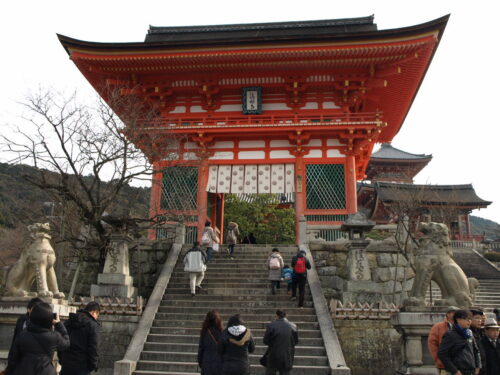
| Nio-mon (Deva Gate) | A two-story romon gate painted in bright vermilion. It measures approximately 10 meters wide and 14 meters high. The roof features a hip-and-gable design. | Known as the “Red Gate,” it houses two fierce Nio guardians (Misshaku Kongo and Naraen Kongo) and a pair of Komainu (lion-dogs) that guard the temple entrance against evil. |
| Sai-mon (West Gate) | Reconstructed in 1631, this gate features an intricate karahafu (undulating gable) roof style, typical of the grandiose Momoyama architecture. | Historically a place for Nissokan (contemplation of the setting sun), representing the gateway to the Western Pure Land (Paradise). |
| Zuigu-do Hall | A sub-temple hall built in the Shinden-zukuri style. It was reconstructed in 1718. | Famous for the Tainai Meguri (Womb Walk), a pitch-black underground passage symbolizing the womb of the female Bodhisattva, leading to a glowing stone where visitors make a wish. |
| Okuno-in Hall | Located directly above the Otowa Waterfall, this hall mimics the Main Hall’s architecture on a smaller scale, including its own kakezukuri stage. | Offers the classic photographic vantage point of the Main Hall and the Kyoto cityscape. It enshrines a seated Kannon statue. |
These structures, along with the Koyasu Pagoda visible across the valley, form a cohesive architectural narrative that has been recognized as part of the Historic Monuments of Ancient Kyoto by UNESCO. Each gate and hall serves a specific function in the pilgrim’s journey, guiding them from the secular world at the Nio-mon to the sacred inner sanctums of the complex.
Materials and Traditional Techniques Behind the Structure
The enduring stability and aesthetic beauty of Kiyomizu-dera Temple are not merely a result of its design but are deeply rooted in the specific materials chosen and the sophisticated engineering techniques employed by Edo-period artisans. The structural integrity of the main hall and its famous stage relies on a harmonious relationship between high-quality timber and complex joinery, a philosophy that has allowed the temple to withstand centuries of weathering and seismic activity.
The Critical Role of Hinoki and Keyaki Wood
In traditional Japanese architecture, the selection of wood is paramount. Builders of Kiyomizu-dera utilized specific species of timber based on their mechanical properties and resistance to the elements. The two most significant woods used in the complex are Keyaki (Japanese Zelkova) and Hinoki (Japanese Cypress).
Keyaki (Japanese Zelkova): Known for its incredible hardness, density, and dynamic grain, Keyaki is used for the structural skeleton of the temple. The 139 massive pillars supporting the Kiyomizu Stage are hewn from Keyaki trunks, some of which are over 400 years old. This wood is chosen for its high load-bearing capacity and resistance to rot, which is essential for pillars that are exposed to the elements on the steep hillside.
Hinoki (Japanese Cypress): Prized for its straight grain, distinct aroma, and resistance to humidity, Hinoki is used primarily for the flooring of the stage and the intricate roof bark. The stage floor consists of over 410 Hinoki boards. These boards are exceptionally durable against rain and wear, and their smooth texture provides a dignified surface for religious ceremonies and visitors alike.
| Wood Type | Botanical Name | Primary Application | Key Characteristics |
|---|---|---|---|
| Keyaki | Zelkova serrata | Main structural pillars, beams | High density, superior load-bearing strength, rot resistance. |
| Hinoki | Chamaecyparis obtusa | Stage flooring, roof bark (Hiwadabuki) | Water resistance, aromatic, straight grain, smooth finish. |
Master Craftsmanship: Kigumi and Joinery Techniques
The defining feature of Kiyomizu-dera’s engineering is the use of Kigumi, the traditional Japanese art of interlocking wood joints without the use of metal nails. In the humid climate of Japan, iron nails are prone to rust and corrosion, which can weaken the wood over time. Furthermore, rigid metal fasteners can cause wood to split when the structure sways during an earthquake.
By avoiding nails, the carpenters ensured that the building remains flexible. The wooden joints can shift slightly during tremors, absorbing the seismic energy rather than resisting it to the point of fracture. This “soft structure” approach is a major reason why the main hall survived the Great Great East Japan Earthquake and other historical tremors that devastated stiffer structures. The lattice-like framework of the stage support acts almost like a shock absorber, distributing weight and stress evenly across the hillside.
For further insights into the history and preservation of these structures, the Official Kiyomizu-dera Temple Website provides detailed archival information.
Tsugite and Shikuchi: The Art of Connecting Wood
Within the broad category of Kigumi, there are two distinct types of joinery techniques extensively used in the temple’s construction: Tsugite and Shikuchi.
Tsugite (Splicing Joints)
Tsugite refers to the technique of connecting two pieces of wood end-to-end to create a longer beam or pillar. Since the availability of timber with the necessary length for such a massive structure is limited, artisans used complex splicing joints to extend the reach of the wood. These joints are often shaped like puzzle pieces (such as the “Kanawa-tsugi” or rod-tenon joint) that lock together tighter as weight is applied, ensuring that the spliced beam is as strong, if not stronger, than a single solid log.
Shikuchi (Connecting Joints)
Shikuchi involves joining wood at an angle, such as where a horizontal beam meets a vertical pillar. This is critical for the “Kakezukuri” overhang style. The penetrating tie beams (nuki) pass directly through the massive pillars, secured by wedges. This method allows the entire wooden framework to move as a single cohesive unit.
- Durability: If a section of the wood rots, the joinery system allows for the replacement of individual parts without dismantling the entire building.
- Seismic Resilience: The friction between the wood surfaces in these joints dampens vibration energy.
- Aesthetic: The exposed joinery is often visible, showcasing the structural logic and the carpenter’s skill as part of the building’s beauty.
The mastery of these techniques requires decades of training. The preservation of Kiyomizu-dera is not just about maintaining the physical wood, but also about passing down the intangible cultural heritage of these carpentry skills to future generations, a value recognized by UNESCO in its designation of the site.
Historical Context and Preservation Efforts
Evolution of the Temple Through the Centuries
The history of Kiyomizu-dera Temple is a testament to resilience, spanning over 1,200 years of Japanese history. Founded in 778 AD by the monk Enchin, who discovered the sacred Otowa Waterfall, the temple was later established under the patronage of the general Sakanoue no Tamuramaro in 798 AD. Throughout the Heian and medieval periods, Kiyomizu-dera became a central figure in the spread of Kannon worship, attracting pilgrims from all social classes, from aristocrats to commoners.
However, the temple’s wooden architecture made it vulnerable to the frequent fires that plagued Kyoto, often caused by lightning or civil warfare. Historical records indicate that the temple complex was destroyed and rebuilt more than nine times. notably suffering severe damage during the Bunmei era (1469–1487) amidst the chaos of the Onin War. Each reconstruction served not only to restore the structures but often to expand and refine the architectural techniques, leading to the sophisticated complex seen today.
| Era | Year | Key Historical Event |
|---|---|---|
| Nara Period | 778 | Founding of the temple by Enchin Shonin near Otowa Waterfall. |
| Heian Period | 798 | Formal construction of the Main Hall sponsored by Sakanoue no Tamuramaro. |
| Muromachi Period | 1469 | Destruction of major buildings during the Onin War civil conflict. |
| Edo Period | 1633 | Comprehensive reconstruction of the current complex by the Tokugawa Shogunate. |
| Modern Era | 1994 | Designation as a UNESCO World Heritage Site. |
Reconstruction History and the Legacy of Tokugawa Iemitsu
The breathtaking architecture that visitors admire today is largely the result of a massive reconstruction effort in the early Edo period. In 1633, Tokugawa Iemitsu, the third Shogun of the Tokugawa dynasty, ordered the rebuilding of the temple complex. This project was a display of the Shogunate’s power and religious devotion, resulting in the restoration of the Main Hall (Hondo), the Stage, the Three-Storied Pagoda, and several other gates and sub-temples.
The 1633 reconstruction is significant because it solidified the Momoyama architectural style within the temple grounds, characterized by ornate detailing and robust structural engineering designed to withstand earthquakes. The fact that the massive wooden stage and the main hall have survived for nearly 400 years since this reconstruction—despite the humid climate of Japan—is a tribute to the high level of carpentry skills possessed by the artisans of the Edo period. The Historic Monuments of Ancient Kyoto, including Kiyomizu-dera, were recognized by UNESCO largely due to the authenticity and historical integrity preserved from this era.
Modern Preservation and Sustainable Forestry Initiatives
Preserving a massive wooden structure like Kiyomizu-dera requires continuous maintenance and a forward-thinking approach to resource management. In recent years, the temple underwent the “Heisei Great Renovation,” a major restoration project concluded in 2020. This involved the meticulous re-roofing of the Main Hall using traditional hiwadabuki (cypress bark) techniques, ensuring the building remains watertight and beautiful for coming decades.
Beyond immediate repairs, the temple is actively engaged in sustainable forestry to ensure future generations can maintain the structure. The massive Keyaki (Zelkova) pillars that support the Kiyomizu Stage have a lifespan of roughly 400 to 800 years, but the supply of such large timber is dwindling in Japan. To address this, Kiyomizu-dera has initiated a project to plant and cultivate forests specifically for future restoration needs.
This long-term vision includes the planting of Keyaki and Hinoki (Japanese Cypress) saplings in the mountains of Kyoto. The temple operates on a centuries-long timeline, understanding that the trees planted today will be the pillars supporting the stage 400 years from now. This cycle of planting, growing, and harvesting reflects a deep spiritual and architectural philosophy where the building is living in harmony with nature’s cycles. For more details on the temple’s history and projects, visitors can refer to the Kiyomizu-dera Official Website.
Kiyomizu-dera’s Cultural Significance and Global Legacy
Kiyomizu-dera Temple stands not only as a historic religious site but as a profound testament to the ingenuity of Japanese culture. Its recognition extends far beyond the borders of Japan, serving as a global ambassador for traditional wooden architecture and spiritual heritage. Designated as a UNESCO World Heritage Site in 1994 as part of the “Historic Monuments of Ancient Kyoto,” the temple represents a unique convergence of structural resilience, artistic beauty, and deep-rooted religious devotion that has survived for over a millennium.
A Pinnacle of Traditional Japanese Engineering
The architectural legacy of Kiyomizu-dera is defined by its extraordinary ability to withstand the test of time and nature. In an archipelago prone to frequent earthquakes and typhoons, the survival of the massive main hall and its iconic stage is a vindication of traditional Japanese engineering principles. The structure is often cited by modern architects and engineers as a prime example of seismic isolation and flexible rigidity.
Unlike rigid modern concrete structures that may crack under pressure, the timber framework of Kiyomizu-dera is designed to sway and absorb energy. The traditional Kigumi (interlocking joinery) techniques allow the wood to expand, contract, and shift without collapsing. This “soft structure” philosophy, where the building works with natural forces rather than resisting them, offers valuable lessons for contemporary sustainable architecture.
| Engineering Principle | Application in Kiyomizu-dera | Modern Architectural Relevance |
|---|---|---|
| Seismic Flexibility | Nail-less joints and pillar lattice allow the structure to sway during tremors. | Informs modern vibration control and base isolation technologies in skyscrapers. |
| Material Sustainability | Use of locally sourced Keyaki and Hinoki, replanted for future restoration cycles. | Exemplifies the circular economy and low-carbon construction methods. |
| Topographical Adaptation | Kakezukuri style utilizes steep slopes without extensive land excavation. | Inspires low-impact design that integrates buildings into challenging landscapes. |
Furthermore, the temple’s preservation strategy is a model of long-term thinking. The temple administration has initiated forestry projects to plant and nurture Keyaki and Hinoki forests specifically for restorations that will be needed 400 to 500 years in the future. This multi-generational commitment ensures that the tangible skills of traditional carpentry and the physical structure itself remain immortal.
The Spiritual Connection to Kannon and Nature
While the architecture is physically imposing, the soul of Kiyomizu-dera lies in its spiritual connection to the natural world and the worship of Kannon Bodhisattva (the Goddess of Mercy). The temple is not merely a building placed on a mountain; it is an entity that exists in harmony with Mount Otowa. This relationship reflects the syncretic nature of Japanese faith, blending Buddhist philosophy with ancient Shinto reverence for nature (Animism).
The name “Kiyomizu,” meaning “Pure Water,” is derived from the Otowa Waterfall, which flows at the base of the main hall. For centuries, pilgrims have visited these sacred waters to pray for health, longevity, and success. The architectural design facilitates this spiritual journey; the open-air structure of the Main Hall allows the fragrance of the forest, the sound of the wind, and the changing colors of the seasons—from the cherry blossoms of spring to the fiery maples of autumn—to become part of the prayer experience.
This seamless integration of the built environment and nature provides a sanctuary where visitors can find a sense of peace amidst the bustle of modern life. As a cultural beacon, Kiyomizu-dera continues to educate the world on the Japanese aesthetic of wabi-sabi (finding beauty in impermanence and nature) and the importance of preserving cultural landscapes. It remains a living institution, bridging the gap between the ancient capital’s history and the future of global heritage conservation.
For more information on the temple’s designation and history, you can visit the UNESCO World Heritage Centre or the official Kiyomizu-dera Temple website.
Conclusion
Kiyomizu-dera Temple stands not only as a spiritual sanctuary but as a monumental achievement in the history of Japanese architecture. From its precarious position on the steep slopes of Mount Otowa to the intricate details of its joinery, the temple complex embodies a profound harmony between human ingenuity and the natural world. As we have explored, the architectural brilliance of this UNESCO World Heritage site goes far beyond its aesthetic beauty, revealing a sophisticated understanding of structural engineering, material science, and sustainable building practices that have endured for centuries.
The Enduring Legacy of Kakezukuri and Traditional Craftsmanship
The defining feature of Kiyomizu-dera, the massive wooden stage, remains a testament to the resilience of the Kakezukuri (overhang) construction style. By utilizing a lattice of robust Keyaki (Zelkova) pillars and interlocking nuki (rails) without the use of a single metal nail, the builders created a structure capable of withstanding Kyoto’s frequent earthquakes. This reliance on Kigumi (traditional wooden joinery) allows the timber to flex and absorb seismic energy, a technique that modern engineering continues to study and admire. The seamless integration of the Hondo (Main Hall) with the cliffside demonstrates a masterful adaptation to topography, ensuring the temple remains secure despite the challenging terrain.
Preservation of History and Materials
The longevity of Kiyomizu-dera is also a story of meticulous material selection and historical preservation. The deliberate use of Hinoki (Japanese cypress) for flooring and roofing, prized for its rot resistance, alongside the structural might of Keyaki, highlights the foresight of the artisans who rebuilt the complex in 1633 under the order of Tokugawa Iemitsu. Today, the temple’s commitment to the future is evident in its forestry initiatives, ensuring that the specific timber required for restoration will be available for generations to come. This cycle of growth, construction, and restoration mirrors the Buddhist concepts of renewal and continuity that the temple represents.
Summary of Architectural Highlights
To summarize the key architectural elements that define Kiyomizu-dera’s global legacy, the following table outlines the essential components and their significance within the complex.
| Architectural Element | Primary Material | Construction Technique | Significance |
|---|---|---|---|
| Kiyomizu Stage | Keyaki (Pillars), Hinoki (Flooring) | Kakezukuri (Overhang), Nail-less Joinery | Provides earthquake resistance and panoramic views; the temple’s most iconic feature. |
| Hondo (Main Hall) | Hinoki Bark (Roof) | Yosemune-zukuri (Hipped Roof) | A National Treasure housing the primary Kannon deity; exemplifies Momoyama period design. |
| Structural Joinery | Wood-on-Wood | Tsugite & Shikuchi (Interlocking Joints) | Ensures structural flexibility and durability without metal corrosion. |
| Three-Storied Pagoda | Vermilion-lacquered Wood | Traditional Pagoda Construction | One of the tallest in Japan (31m); houses the Tainai Meguri experience. |
Ultimately, Kiyomizu-dera is a living museum of Japanese carpentry. It serves as a bridge connecting the modern visitor to the Edo period’s architectural grandeur and the Heian period’s spiritual foundations. For those seeking to understand the depth of Japan’s building traditions, the temple offers an unparalleled educational experience. To learn more about the preservation of this site and its status as a global treasure, visitors can consult the UNESCO World Heritage Centre or the Official Kiyomizu-dera Website.