Explore Ginzan Onsen Architecture and the Charm of Taisho Era Wooden Ryokan
2026年02月02日
Discover the architectural charm of Ginzan Onsen’s Taisho-era wooden ryokans. Learn how the 1913 flood shaped its unique Western-Japanese fusion style. By exploring iconic inns like Notoya Ryokan, you will understand the history of this nostalgic, gas-lit townscape.
The History Behind Ginzan Onsen Architecture
Ginzan Onsen, located in Obanazawa City, Yamagata Prefecture, is renowned for its nostalgic townscape that evokes the atmosphere of the early 20th century. While the current wooden architecture is a defining feature, the town’s origins date back much further to the Edo period. Understanding the transformation from a bustling silver mining town to a secluded hot spring resort provides essential context for appreciating the unique multi-story structures seen today.
From Silver Mine to Hot Spring Resort
The history of the area began in 1456 with the discovery of the Nobesawa Ginzan (Nobesawa Silver Mine). During the early Edo period, it flourished as one of Japan’s three major silver mines, alongside Iwami in Shimane and Ikuno in Hyogo. At its peak, the mining town supported a massive population, and the silver produced here was a crucial economic resource for the Tokugawa Shogunate.
However, by 1689, the mine was closed due to a decline in silver output and mine collapses. As the mining industry vanished, the area pivoted to utilize the high-quality hot spring water that had naturally gushed forth during mining operations. The town reinvented itself as a toji-ba (therapeutic hot spring resort). During this era, the landscape was quite different from the modern view; the valley was lined with modest, thatched-roof farmhouses rather than the towering wooden inns seen today.
| Era / Year | Key Event | Impact on Architecture |
|---|---|---|
| 1456 | Discovery of Nobesawa Silver Mine | Establishment of a mining settlement. |
| 1689 | Closure of the Silver Mine | Transition to a hot spring resort with thatched-roof inns. |
| 1913 (Taisho 2) | The Great Flood | Destruction of most thatched-roof buildings. |
| 1920s (Taisho Era) | Reconstruction Boom | Construction of multi-story wooden ryokans in Western-Japanese fusion style. |
| 1986 | Townscape Preservation Ordinance | Implementation of rules to protect the historical scenery (e.g., burying power lines). |
Rebuilding After the Great Flood of 1913
The architectural landscape of Ginzan Onsen underwent a dramatic transformation following a catastrophic event. In 1913 (Taisho 2), a massive flood from the Ginzan River swept through the valley, destroying most of the traditional thatched-roof inns. This disaster forced the local innkeepers to rebuild the town from the ground up.
The reconstruction coincided with the Taisho era (1912–1926), a period characterized by “Taisho Roman” (Taisho Romanticism)—a cultural movement that blended traditional Japanese aesthetics with Western modernism. Due to the limited flat land available along the narrow river valley, inn owners opted to build vertically. They constructed three- and four-story wooden structures, which were rare for wooden buildings at the time. These new inns featured balconies, glass windows, and Western-style architectural details, creating the distinct, uniform townscape that remains today.
Efforts to preserve this unique historical environment have been ongoing. In 1986, a local ordinance was enacted to protect the townscape, leading to modern improvements such as the burial of utility poles and the restriction of vehicle traffic, ensuring the Taisho-era atmosphere remains unspoiled for visitors.
Characteristics of Taisho Era Wooden Ryokan
The architectural landscape of Ginzan Onsen is defined by its unique reconstruction following the Great Flood of 1913. Unlike many other hot spring resorts in Japan that feature sprawling, low-rise complexes, Ginzan Onsen is characterized by a dense row of vertically oriented wooden structures. These buildings encapsulate the “Taisho Roman” aesthetic, a stylistic movement from the Taisho era (1912–1926) that romanticized the blending of traditional Japanese culture with the influx of Western modernity.
Multi Story Wooden Structures and Balconies
One of the most striking features of Ginzan Onsen is the height of its wooden inns. Due to the narrow valley topography, land along the Ginzan River was scarce. To maximize capacity within this limited footprint, ryokan owners in the Taisho and early Showa periods expanded vertically, constructing three- and four-story wooden buildings. This was a significant architectural feat for the time, as traditional Japanese inns were typically limited to two stories.
These multi-story structures create a canyon-like effect, with the buildings looming over the narrow cobblestone streets and the river. A defining element of these facades is the presence of river-facing balconies and verandas. These open spaces were designed not only for ventilation but to allow guests to engage with the town’s atmosphere, listening to the rushing water of the Ginzan River and observing the gas-lit streets below.
The Fusion of Western and Japanese Styles
The “Taisho Roman” style is visually distinct because it harmonizes contrasting architectural philosophies. In Ginzan Onsen, this is manifest in the use of traditional Japanese carpentry techniques alongside Western decorative elements. The inns retain the warmth of exposed wood and clay walls but incorporate modern flourishes that were fashionable in the early 20th century, such as Western-style glass windows and geometric tiling.
A hallmark of this fusion is the extensive use of Kote-e (colored plaster reliefs). These artistic reliefs are often found on the tobukuro (door pockets for rain shutters) or the upper walls of the inns. Crafted by skilled plasterers, they depict auspicious symbols like cranes, tortoises, and pine trees, or sometimes display the name of the inn itself in bold calligraphy. The brightly colored reliefs stand out against the white plaster and dark wood, serving as both signage and artistic expression.
| Architectural Feature | Description | Cultural Influence |
|---|---|---|
| Vertical Construction | 3 to 4-story wooden frames built high to conserve land in the narrow valley. | Japanese adaptation to topography |
| Kote-e (Plaster Reliefs) | Three-dimensional, colored plaster art on walls and shutter boxes, often depicting lucky symbols. | Traditional Japanese craftsmanship |
| Stained Glass | Use of colored or Taisho-glass in windows and transoms, adding a retro-modern flair. | Western Art Deco influence |
| Exposed Wood & Plaster | Dark wooden beams contrasting with white plaster walls. | Traditional Japanese aesthetic |
This eclectic mix creates a nostalgic atmosphere that transports visitors back to the early 20th century. The preservation of these wooden high-rises is rare in modern Japan, making the town a living museum of Taisho era architecture. For a deeper understanding of the cultural significance of these structures, resources from the Japan Tourism Agency and cultural heritage guides provide extensive historical context.
Iconic Buildings to Visit in Ginzan Onsen
Notoya Ryokan and Its Kote-e Plaster Reliefs
Fujiya Ryokan by Architect Kengo Kuma
Kozankaku and Other Historic Inns
| Ryokan Name | Key Architectural Feature | Historical Significance |
|---|---|---|
| Notoya Ryokan | Central tower and “Kote-e” plaster relief signage | Built in 1925; Registered Tangible Cultural Property. |
| Fujiya Ryokan | Bamboo screens (Sumushiko) and stained glass | Renovated by Kengo Kuma in 2006; Modern fusion. |
| Kozankaku | Colorful Kote-e depicting deities and seasons | One of the oldest surviving wooden structures in the town. |
| Kosekiya Annex | Taisho Roman interior styling | Historic exterior with renovated nostalgic interiors. |
The Atmospheric Elements of the Town
Beyond the individual architectural masterpieces, the true allure of Ginzan Onsen lies in the collective atmosphere created by the townscape itself. The integration of the flowing river, the narrow stone-paved streets, and the warm illumination creates an immersive experience that transports visitors back to the early 20th century. This distinct “Taisho Roman” ambiance is carefully preserved through specific environmental elements that define the town’s character.
Gas Lights Illuminating the River at Night
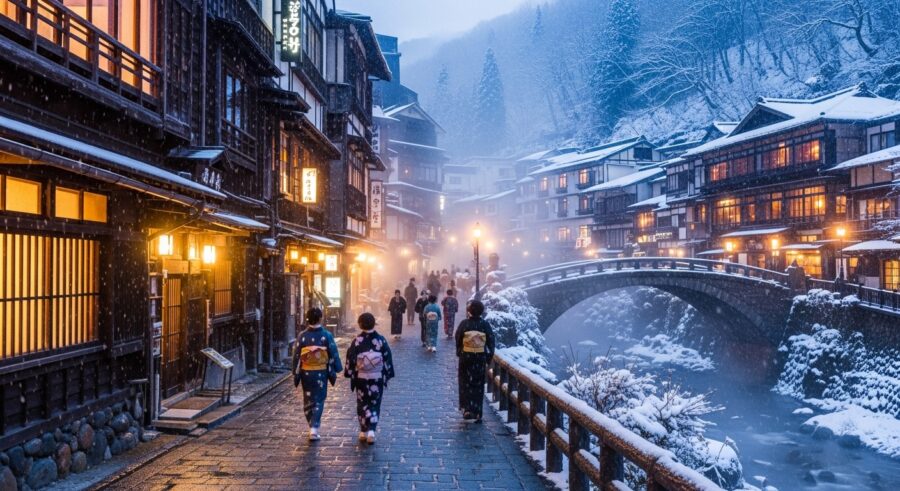
As dusk settles over the valley, the town undergoes a dramatic transformation. Gas streetlamps (gas-to) lining the Ginzan River are manually lit, casting a warm, orange glow that reflects off the water and the wooden facades of the ryokan. Unlike modern electric LED lighting, these gas lamps flicker with a soft, organic light that enhances the shadows and textures of the timber frames and white plaster walls.
The most photogenic moment occurs during the “blue hour,” approximately 30 minutes after sunset, when the sky retains a deep indigo hue that contrasts vividly with the warm amber light of the lamps. This interplay of light and shadow embodies the traditional Japanese aesthetic of In’ei Raisan (In Praise of Shadows), emphasizing beauty found in subtlety and dimness rather than harsh brightness. Strolling across the vermilion bridges in a rented colorful yukata or hakama during this time completes the feeling of slipping back into the Taisho era.
Winter Scenery and Snow Covered Architecture
While Ginzan Onsen is picturesque year-round, it is arguably most iconic during the winter months. Located in a heavy snowfall region of Yamagata Prefecture, the town becomes blanketed in deep snow from late December to early March. The snow creates thick, rounded caps on the tiled roofs and accumulates on the balconies, softening the sharp architectural lines and acting as a natural sound dampener that hushes the valley.
The visual contrast between the pure white snow and the warm gas light creates a magical, dreamlike scene often compared to the setting of the animated film Spirited Away. Visitors often engage in yukimiguro, the practice of bathing in open-air hot springs while watching the snow fall. Due to the popularity of this season, strict traffic control measures are often implemented to preserve the tranquility and safety of the narrow streets.
| Feature | Details |
|---|---|
| Peak Snow Season | January to February (Deepest accumulation) |
| Average Temperature | Highs of 0°C (32°F) / Lows of -4°C (24.8°F) |
| Visual Highlight | Gas lights reflecting on snow-covered streets and river |
| Access Restrictions | Personal vehicles restricted; park-and-ride or shuttle bus required |
For those planning a visit, understanding the seasonal dynamics is crucial. The winter landscape offers a breathtaking view that has become a symbol of traditional Japanese winter, but it requires preparation for freezing temperatures and potential travel limitations due to the weather.
Sources:
Japan Guide,
The Hidden Japan
Conclusion
Ginzan Onsen stands as a remarkable testament to the resilience and aesthetic vision of the Taisho era. Unlike many hot spring resorts that have modernized into concrete complexes, this secluded town in Yamagata Prefecture has meticulously preserved its wooden architectural heritage. The rebuilding efforts following the Great Flood of 1913 did not merely restore the town; they birthed a unified landscape of three- and four-story wooden ryokans that capture the essence of “Taisho Roman”—a unique period in Japanese history characterized by a romantic blend of traditional Japanese craftsmanship and Western artistic influences.
The architectural significance of Ginzan Onsen extends beyond individual buildings. It is the collective harmony of the townscape that creates its immersive atmosphere. The preservation of the intricate kote-e (plaster relief art) adorning facades like that of the Notoya Ryokan, alongside the warm glow of gas streetlamps, allows visitors to step back in time. Even modern interventions, such as the renovation of Fujiya Ryokan by renowned architect Kengo Kuma, respect this historical context by utilizing traditional materials like bamboo and stained glass in contemporary ways, ensuring the town’s legacy evolves without losing its soul.
Summary of Architectural Highlights
For travelers and architecture enthusiasts planning a visit, understanding the distinct features of the key inns enhances the experience. The town is best explored on foot, allowing for a close examination of the carpentry and artistic details that define these historic structures.
| Building / Feature | Architectural Style & Key Elements | Cultural Significance |
|---|---|---|
| Notoya Ryokan | Traditional multi-story wooden structure featuring a central tower and colorful kote-e plaster reliefs. | Designated as a Registered Tangible Cultural Property; represents the pinnacle of Taisho-era carpentry. |
| Fujiya Ryokan | Modern Japanese style (redesigned in 2006). Features a façade of delicate bamboo screens (Sudare) and stained glass. | Demonstrates how contemporary architecture can coexist with and pay homage to historical surroundings. |
| Kozankaku | Classic wooden ryokan architecture with massive structural beams and traditional tiled roofing. | Known for its exterior paintings (kote-e) depicting the god of wealth, symbolizing the town’s prosperity. |
| Gas Streetlamps | Western-style iron lamps lining the Ginzan River. | Integral to the “Taisho Roman” atmosphere, particularly illuminating the snow in winter evenings. |
Preserving the Nostalgic Landscape
Ultimately, the charm of Ginzan Onsen lies in its ability to evoke a deep sense of nostalgia. The town’s strict preservation rules, which limit signage and maintain the wooden facades, ensure that the scenery remains unspoiled by modern distractions. Whether visited during the verdant green of summer or the deep snows of winter, the architecture serves as a stage for the natural beauty of the valley. A visit to Ginzan Onsen is not just a stay at a hot spring; it is an architectural pilgrimage to one of the few remaining places where the spirit of the Taisho era remains tangibly alive. For more information on visiting and accommodation, travelers can consult the Japan National Tourism Organization (JNTO) guide.