Kinkaku-ji (Golden Pavilion): Kyoto’s Shimmering UNESCO World Heritage Site
2026年01月17日
Embark on a virtual journey to Kinkaku-ji, Kyoto’s iconic Golden Pavilion. This article unveils its rich history, stunning architecture, serene gardens, and practical visitor information, ensuring you grasp why this UNESCO World Heritage Site is a must-see and how to best experience its splendor.
Discovering Kinkaku-ji: An Overview
Nestled amidst the serene landscapes of northern Kyoto, Kinkaku-ji stands as one of Japan’s most iconic and visually striking landmarks. While popularly known as the “Golden Pavilion” due to its dazzling gold-leaf exterior, the site is officially designated as Rokuon-ji (Deer Garden Temple). It functions as a prominent Zen Buddhist temple of the Shokoku-ji branch of the Rinzai sect.
Kinkaku-ji is not merely a beautiful temple; it is a vital component of the “Historic Monuments of Ancient Kyoto,” a prestigious collection of sites inscribed as a UNESCO World Heritage Site in 1994. Its allure stems from a rich tapestry of history, dating back to the late 14th century, and an architectural brilliance that seamlessly blends different styles, making it a masterpiece of Japanese cultural heritage.
The Enduring Allure and Significance of the Golden Pavilion
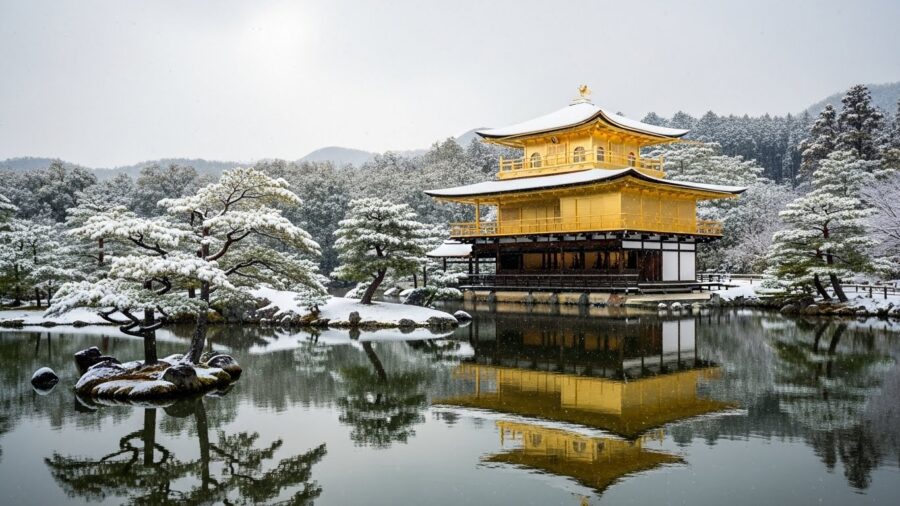
The centerpiece of the Rokuon-ji temple complex is the Golden Pavilion (Kinkaku) itself, a three-story edifice renowned for its top two floors being entirely covered in brilliant gold leaf. This radiant exterior creates a breathtaking spectacle, especially when illuminated by sunlight or mirrored perfectly on the surface of the Kyoko-chi Pond (Mirror Pond) that it overlooks.
The temple’s stunning appearance and profound historical context make it a quintessential representation of Kyoto’s enduring legacy. Its presence evokes the opulent Kitayama culture that flourished during the era of Ashikaga Yoshimitsu, the third shogun of the Muromachi period. This culture was characterized by a unique fusion of courtly aristocratic elegance and samurai aesthetics, heavily influenced by Zen Buddhism and Ming-dynasty Chinese culture. The structure was originally built as a retirement villa for the powerful shogun in 1397 and was transformed into a Zen temple after his death in 1408, fulfilling his final wishes.
Essential Facts About Rokuon-ji Temple Complex
To understand the scope and status of this historic site, the following table outlines the essential details regarding its location, affiliation, and heritage status.
| Feature | Detail |
|---|---|
| Official Name | Rokuon-ji (鹿苑寺) |
| Popular Name | Kinkaku-ji (金閣寺), Golden Pavilion |
| Location | Kita-ku, Kyoto, Japan |
| Temple Affiliation | Rinzai Zen Buddhism, Shokoku-ji branch |
| Original Purpose | Retirement villa (Kitayama-dono) for Shogun Ashikaga Yoshimitsu |
| UNESCO Status | Part of “Historic Monuments of Ancient Kyoto” (Designated 1994) |
| Reconstruction | Current structure rebuilt in 1955 following an arson incident in 1950 |
For the most accurate and up-to-date information regarding temple events and religious services, visitors are encouraged to consult the official website of Kinkaku-ji.
The history of Kinkaku-ji is a dramatic tapestry woven with threads of political power, cultural flourishing, tragic destruction, and resilient rebirth. While the shimmering Golden Pavilion appears timeless, its narrative spans over six centuries, evolving from a nobleman’s villa to a Zen sanctuary and eventually becoming one of the most recognized UNESCO World Heritage Sites in Japan.
A Journey Through Kinkaku-ji’s Rich History
From Shogun’s Villa to Zen Temple: The Origins of Rokuon-ji
The origins of the Kinkaku-ji site date back to the Kamakura period (1185–1333) when it was known as Kitayama-dai, a villa owned by the powerful aristocrat Saionji Kintsune. However, the temple’s true legacy began in 1397, when Ashikaga Yoshimitsu, the third shogun of the Muromachi shogunate, purchased the site.
Yoshimitsu abdicated his title to his son but retained actual power, transforming the estate into a lavish retirement villa known as Kitayama-dono. During Yoshimitsu’s residence, the villa became the epicenter of the Kitayama Culture, a unique cultural period that fused the traditional aesthetics of the imperial court aristocracy with the rising influence of the samurai warrior class and Zen Buddhism. It was here that Yoshimitsu received envoys from Ming Dynasty China, significantly influencing Japanese art and trade.
Upon Yoshimitsu’s death in 1408, in accordance with his last will, the renowned priest Musō Soseki was designated as the honorary founder, and the villa was converted into a Rinzai Zen temple. It was named Rokuon-ji (Deer Garden Temple), derived from Yoshimitsu’s posthumous Buddhist name, Rokuon-in-den.
The 1950 Arson and the Pavilion’s Resilient Reconstruction
While the Golden Pavilion miraculously survived the devastation of the Onin War (1467–1477), which destroyed much of Kyoto, it could not escape a modern tragedy. On July 2, 1950, the pavilion was burned to the ground by a 22-year-old novice monk, Hayashi Yoken, who suffered from mental illness.
This catastrophic event resulted in the total loss of the original structure, a National Treasure, along with a wooden statue of Ashikaga Yoshimitsu. The arson shocked the nation and later inspired profound literary works, most notably Yukio Mishima’s acclaimed novel, The Temple of the Golden Pavilion (Kinkakuji).
Despite the loss, the cultural importance of the site demanded its restoration. The current structure is a brilliant reconstruction completed in 1955. It was built faithfully to the original design but incorporated modern fire-prevention measures. In 1987, extensive renovation work was carried out to repair the interior paintings and to re-gild the exterior with gold leaf five times thicker than the original coating, ensuring the pavilion would continue to shine for generations.
Why Kinkaku-ji Earned UNESCO World Heritage Status
In December 1994, Kinkaku-ji was inscribed as a UNESCO World Heritage Site as part of the “Historic Monuments of Ancient Kyoto.” Its designation is not merely due to its age, but because it represents a masterpiece of Japanese garden design and architecture that illustrates a significant stage in human history.
The temple is recognized for its “Outstanding Universal Value,” particularly for how its architecture harmonizes with the surrounding landscape to create a representation of the Pure Land (Buddhist paradise) on earth. The table below outlines the key elements contributing to its heritage status.
| Heritage Element | Description and Significance |
|---|---|
| Landscape Design | The garden is a prime example of the chisen-kaiyu-shiki (stroll garden with a central pond) style. The integration of the Golden Pavilion with the Kyoko-chi Pond demonstrates the Muromachi period’s high artistic achievement in blending structures with nature. |
| Cultural Fusion | The site embodies Kitayama Culture, showcasing the successful amalgamation of court noble refinement, samurai strength, and Chinese Zen influences, which dictated Japanese aesthetics for centuries to follow. |
| Authenticity of Spirit | Although the main pavilion is a reconstruction, UNESCO recognizes the site’s integrity and the continuity of its religious and cultural function since the 14th century. |
The Architectural Marvel of the Golden Pavilion
The Golden Pavilion, or Kinkaku, serves as the shariden (reliquary hall) of Rokuon-ji Temple and stands as one of the most celebrated examples of Muromachi period architecture. Its enduring fame stems not only from its opulent exterior but from the unique structural harmony achieved by stacking three distinct architectural styles atop one another. This design is said to reflect the vision of Ashikaga Yoshimitsu, who sought to blend the aesthetics of the court aristocracy, the samurai warrior class, and the Zen Buddhist priesthood into a unified expression of Kitayama culture.
The Three Distinct Styles of the Pavilion’s Stories
The three-story structure is a masterpiece of eclecticism, where each floor represents a different era and social class of Japanese history. While the top two stories are covered in brilliant gold leaf, the ground floor retains a natural wood finish, grounding the structure in earthly simplicity before ascending to spiritual brilliance.
| Floor | Japanese Name | Architectural Style | Key Features & Significance |
|---|---|---|---|
| First Floor | Hossui-in (Chamber of Dharma Waters) | Shinden-zukuri (Palace Style) | Reminiscent of 11th-century Heian imperial aristocracy. It features natural, unpainted wood and white plaster walls. The open verandas extend toward the pond, blurring the line between the interior and the garden. It houses a statue of Shaka Nyorai (historical Buddha) and Ashikaga Yoshimitsu. [cite [cite |
Exploring Kinkaku-ji’s Serene Gardens
Beyond the resplendent Golden Pavilion itself, the meticulously crafted gardens of Rokuon-ji (Kinkaku-ji) offer a profound experience of traditional Japanese landscape design. Designated as a Special Place of Scenic Beauty, these grounds invite visitors into a realm of tranquility and symbolic beauty. The gardens are a prime example of Muromachi period design, emphasizing the seamless integration of structures within the natural landscape to create a “Pure Land Paradise” on earth.
Kyoko-chi Pond: The Mirror Reflecting Gold
The centerpiece of the temple grounds is the expansive Kyoko-chi Pond, widely known as the “Mirror Pond.” This tranquil body of water plays a crucial role in the aesthetic appeal of the complex, flawlessly reflecting the shimmering gold leaf of the pavilion and the surrounding lush greenery. The reflection, often referred to as the “Inverted Golden Pavilion,” creates a breathtaking illusion of a floating palace, blurring the boundary between the terrestrial and the spiritual.
The pond is not merely a reflective surface but a carefully composed arrangement of islands and stones. It features numerous small islands and strategically placed rocks that hold deep symbolic meaning, representing famous locations in Chinese and Japanese literature as well as auspicious concepts:
- Ashihara-jima: The largest islet in the pond, often said to represent the Japanese islands.
- Tsuru-jima (Crane Island) and Kame-jima (Turtle Island): These rock formations symbolize the crane and the turtle, creatures associated with longevity and good fortune in Japanese culture.
Visitors navigate the grounds via a path that circles the pond. This design, known as kaiyu-shiki-teien (stroll garden), encourages a leisurely walk that reveals diverse viewpoints and shifting perspectives of the pavilion as the scenery unfolds. The strategic placement of the pavilion ensures that it remains the focal point from various vantage points along the trail.
Key Features of Traditional Japanese Landscape Design
The gardens of Kinkaku-ji exemplify the “paradise model” of garden design, which flourished during the Muromachi period. This style aims to create a harmonious balance between heaven and earth, drawing inspiration from Buddhist cosmology. The design utilizes the technique of shakkei (borrowed scenery), incorporating the distant Mount Kinugasa into the garden’s composition to create an extended and integrated view that feels boundless.
While the Golden Pavilion draws the most attention, the garden contains several distinct features that contribute to its status as a masterpiece of landscape architecture. The following table details these key elements found throughout the grounds.
| Garden Feature | Description and Significance |
|---|---|
| Rikushyu-no-Matsu (Land Boat Pine) | This remarkable pine tree, estimated to be approximately 600 years old, is trained in the shape of a sailing boat. It is said to have been planted by Ashikaga Yoshimitsu himself. The “prow” of the boat-shaped pine points toward the west, symbolizing the journey to the Pure Land of Amida Buddha. |
| Ryumonbaku (Dragon Gate Waterfall) | A small but significant cascade located north of the pond. Beneath the falling water lies the Rigyo-seki (Carp Stone), which resembles a carp attempting to swim up the waterfall. This references the Chinese legend that a carp climbing a waterfall turns into a dragon, symbolizing spiritual attainment and perseverance. |
| Anmintaku Pond | A smaller, serene pond located on higher ground behind the pavilion. In its center stands a small stone pagoda (Hakuja-no-tsuka) dedicated to the White Snake, a guardian deity. Legend holds that this pond never dries up, ensuring a constant water source even during droughts. |
| Sekkatei Teahouse | Perched on a hill at the back of the garden, this teahouse was added during the Edo period. Its name, meaning “Place of Evening Beauty,” suggests it is an ideal spot to view the Golden Pavilion bathed in the glow of the setting sun. It features a famous pillar made of nandin wood (heavenly bamboo). |
The garden’s design also embraces the aesthetic philosophy of wabi-sabi, finding beauty in natural imperfection and transience. This is evident in the moss-covered grounds, which symbolize age and harmony, and the seasonal transformations of the landscape. From the delicate cherry blossoms of spring to the vibrant autumn foliage and the stark beauty of snow in winter, the garden offers a unique and contemplative experience year-round.
For further details on the cultural heritage of this site, you can refer to the UNESCO World Heritage Centre or the official Kinkaku-ji website.
Planning Your Visit to Kinkaku-ji
To ensure a smooth and memorable experience at Kinkaku-ji, understanding the best ways to get there, along with operational hours and admission details, is essential. The Golden Pavilion is a popular destination, so planning your visit strategically can significantly enhance your time at this iconic site.
Getting to Kinkaku-ji from Kyoto Station
Kinkaku-ji is located in the northern part of Kyoto. Several convenient transportation options are available from Kyoto Station, the city’s main transportation hub.
By Kyoto City Bus (Direct Route)
The most straightforward and commonly used method for visitors is the Kyoto City Bus. This option offers a direct route to the temple.
- Bus Numbers: Take Kyoto City Bus #101 or #205 from the main bus terminal at Kyoto Station (Karasuma Exit).
- Boarding Point: For Bus #101, board at stand B2. For Bus #205, board at stand B3.
- Destination: Alight at the “Kinkakuji-michi” bus stop. Note that “Kinkakuji-michi” is the main bus stop for Kinkaku-ji, where most buses arrive and depart.
- Duration: The journey typically takes approximately 40 minutes, though this can be longer during peak traffic hours.
- Fare: The flat rate for a single ride is 230 JPY.
- Important Note: When taking Bus #205, ensure you board the standard service, not the “Rapid” service, as some rapid buses do not stop at Kinkakuji-michi.
By Subway and Bus (Traffic-Avoidance Route)
For those looking to potentially avoid city center traffic congestion, combining the subway with a shorter bus ride can be a faster alternative.
- Subway Leg: Take the Karasuma Subway Line from Kyoto Station to Kitaoji Station. This segment takes approximately 15 minutes and costs 260 JPY.
- Bus Transfer: From Kitaoji Station, exit to the Kitaoji Bus Terminal and transfer to Kyoto City Bus #204 or #205.
- Destination: It is a short 10-minute bus ride to the “Kinkakuji-michi” stop.
By Taxi
For maximum comfort and direct access, especially when traveling with luggage or in a group, a taxi is a convenient option.
- Duration: A taxi ride from Kyoto Station to Kinkaku-ji takes approximately 30 minutes.
- Estimated Cost: The fare typically ranges from 3,500 to 4,000 JPY.
- Drop-off: Taxis will drop passengers directly near the temple entrance.
Opening Hours, Admission Fees, and Best Times to Visit
Planning your visit around the temple’s schedule and knowing the admission requirements will ensure a smooth entry and an enjoyable experience.
Operational Schedule and Fees
Kinkaku-ji is open daily throughout the year, offering consistent access to visitors.
| Category | Details |
|---|---|
| Opening Hours | 9:00 AM – 5:00 PM (Daily) |
| Closing Days | None (Open 365 days a year) |
| Admission Fee (Adults) | 500 JPY (High school students and older) |
| Admission Fee (Children) | 300 JPY (Elementary and Junior High students) |
| Payment Method | Cash Only (credit cards and IC cards are generally not accepted at the ticket gate). |
For the most accurate and up-to-date announcements regarding special viewings or maintenance, it is advisable to consult the Official Kinkaku-ji Website.
Best Times to Experience the Golden Pavilion
To capture the perfect photographs and enjoy a more tranquil atmosphere, consider visiting during these recommended times:
- Early Morning (9:00 AM): Arriving right at opening time is highly recommended. The morning sun illuminates the gold leaf from the east, creating a brilliant reflection on the Kyoko-chi Pond (Mirror Pond), and crowds are generally thinner.
- Late Afternoon (3:30 PM – 4:30 PM): As the sun begins to set, the light softens, casting a warm, golden glow over the pavilion. This period is also when many large tour groups start to depart. To allow sufficient time for exploration, aim to arrive no later than 4:00 PM.
- Duration of Visit: Most visitors spend between 45 minutes to an hour exploring the temple grounds.
Seasonal Highlights:
- Autumn (Late November): The contrast between the shimmering golden structure and the fiery red and orange maple leaves creates an iconic and breathtaking scene.
- Winter: On rare occasions when Kyoto experiences snowfall, the “Snow Makeup” (Yukigesho) of Kinkaku-ji is considered one of Japan’s most beautiful and serene sights.
Beyond the Golden Pavilion: Nearby Attractions
While the Golden Pavilion is the primary destination for many, the surrounding area of northwest Kyoto, particularly along the scenic route known as the Kinukake-no-michi (Road of Silk Hanging), offers a cluster of cultural treasures. This historic road, approximately 2.5 kilometers long, connects Kinkaku-ji with other UNESCO World Heritage Sites, allowing visitors to experience a diverse range of Japanese garden styles, architectural history, and spiritual heritage within a relatively short distance. Exploring these nearby sites provides a comprehensive understanding of the Kitayama culture and the evolution of Kyoto’s religious landscape.
Ryoan-ji Temple and Its Zen Garden
Located approximately 1.5 kilometers west of Kinkaku-ji, Ryoan-ji Temple is a must-visit destination that offers a striking contrast to the opulent gold of the Golden Pavilion. A pleasant 20-minute walk or a short ride on Kyoto City Bus #59 connects these two iconic sites. Ryoan-ji is world-renowned for its karesansui (dry landscape) rock garden, which is considered the finest surviving example of this abstract style of Zen design. The garden consists of a rectangular plot of pebbles surrounded by low earthen walls, featuring 15 stones of varying sizes arranged in five groups. The layout is designed with a unique visual trick: from any vantage point on the viewing veranda, at least one of the stones is always hidden from sight. This design invites deep contemplation on the nature of perception and completeness in Zen philosophy, reflecting the idea that true perfection is never fully perceived. Beyond the rock garden, the temple grounds include the extensive Kyoyochi Pond, a remnant of the aristocratic estate that predated the temple, which offers beautiful walking paths and seasonal flora.
Ninnaji Temple and Omuro Cherry Trees
Continuing further west along the Kinukake-no-michi from Ryoan-ji lies Ninnaji Temple, another distinguished UNESCO World Heritage Site. Founded in 888 CE, Ninnaji is classified as a Monzeki temple, indicating that it was traditionally headed by a member of the Imperial family. This lineage is evident in the elegant Goten Palace, which features covered corridors and architectural styles reminiscent of the Kyoto Imperial Palace. Ninnaji is particularly famous for its Omuro Sakura, a grove of late-blooming cherry trees. Unlike the more common Somei Yoshino variety, Omuro cherry trees are shorter in stature, allowing visitors to walk amidst the blossoms rather than just looking up at them. These unique cherry trees typically reach their peak bloom in mid-April, offering a stunning spectacle. The temple complex also boasts a majestic five-story pagoda that dominates the skyline and the Kondo (Main Hall), which is designated as a National Treasure. The walk from Ryoan-ji to Ninnaji takes approximately 10 to 15 minutes, completing a triad of world-class heritage sites in one district.
To help plan your itinerary along the Kinukake-no-michi, the following table outlines key details for these interconnected sites:
| Attraction | Primary Feature | Distance from Previous Site | Recommended Time |
|---|---|---|---|
| Kinkaku-ji | Golden Pavilion & Reflection Pond | Starting Point | 45–60 minutes |
| Ryoan-ji | Zen Rock Garden (Karesansui) | ~20 min walk from Kinkaku-ji | 45–60 minutes |
| Ninnaji | Omuro Cherry Trees & Goten Palace | ~10-15 min walk from Ryoan-ji | 60–90 minutes |
For those utilizing public transport, Kyoto City Bus #59 provides a convenient link between Kinkaku-ji, Ryoan-ji, and Ninnaji, making it easy to visit all three in a single half-day trip. Visiting these sites in succession offers a profound narrative of Kyoto’s history, transitioning from the shogunate’s extravagance at Kinkaku-ji to the samurai’s Zen austerity at Ryoan-ji, and finally to the imperial elegance of Ninnaji.
Conclusion
Kinkaku-ji, universally known as the Golden Pavilion, stands as an indelible symbol of Kyoto’s profound cultural legacy and architectural brilliance. Officially named Rokuon-ji, this Zen Buddhist temple complex transcends its visual splendor, embodying centuries of Japanese history, artistic innovation, and spiritual contemplation. It represents a cornerstone of the “Historic Monuments of Ancient Kyoto,” proudly holding its designation as a UNESCO World Heritage Site since 1994, a testament to its outstanding universal value.
The journey of Kinkaku-ji began in 1397 as the lavish retirement villa, Kitayama-dono, for Shogun Ashikaga Yoshimitsu, who fostered the vibrant Kitayama culture. Following his wishes, it transformed into a Zen temple in 1408. Despite the tragic arson of 1950, the faithful reconstruction completed in 1955, and subsequent regilding in 1987, ensured the preservation of its original design and spiritual essence. This resilience underscores a deep national commitment to safeguarding Japan’s cultural treasures and reflects the Buddhist principle of renewal.
Architecturally, the Golden Pavilion is a masterwork, harmoniously blending three distinct styles across its stories: the aristocratic Shinden-zukuri on the first floor, the samurai Buke-zukuri on the second, and the Zen temple style Zenshu-butsuden on the third. The dazzling gold leaf adorning the upper two floors is not merely decorative; it symbolizes the Pure Land Buddhist paradise, a vision brought to life by its reflection in the tranquil Kyoko-chi Pond. Crowning the roof, the bronze phoenix (Ho-o or Fenghuang) further reinforces its auspicious and imperial connections.
The meticulously designed surrounding gardens, a designated Special Place of Scenic Beauty, are a prime example of the kaiyu-shiki-teien (stroll garden) style. The Kyoko-chi Pond, or “Mirror Pond,” is central, offering breathtaking reflections and incorporating symbolic islands like Tsuru-jima and Kame-jima, representing longevity. The technique of shakkei, or “borrowed scenery,” seamlessly integrates the distant Mount Kinugasa, expanding the garden’s perceived boundaries. Features such as the ancient Rikushyu-no-Matsu pine and the Ryumonbaku waterfall further enrich this landscape, inviting visitors into a realm of peace and contemplation.
A visit to Kinkaku-ji offers an unparalleled immersive experience, where the interplay of history, art, and nature creates a lasting impression. Whether bathed in the morning sun, adorned with vibrant autumn foliage, or blanketed in winter snow, the Golden Pavilion remains a timeless beacon of beauty and spiritual significance. It serves not only as a profound sanctuary but also as a vital window into the aesthetic and philosophical underpinnings of medieval Japan.
Key Attributes of Kinkaku-ji
| Attribute | Description |
|---|---|
| Official Name | Rokuon-ji (鹿苑寺) |
| Common Name | Kinkaku-ji (金閣寺) or Golden Pavilion |
| Historical Origin | Originally built as a retirement villa for Shogun Ashikaga Yoshimitsu in 1397; converted into a Zen temple in 1408. |
| Architectural Style | Features three distinct styles: Shinden-zukuri (1st floor), Buke-zukuri (2nd floor), and Zenshu-butsuden (3rd floor). |
| World Heritage Status | Designated in 1994 as part of the “Historic Monuments of Ancient Kyoto.” |
| Garden Design | A Kaiyu-shiki (strolling style) garden centered around the Kyoko-chi (Mirror) Pond, utilizing “shakkei” (borrowed scenery). |