Sapporo Snow Festival: Snow Buildings That Are Breathtaking and Impressive Even to Professionals
2026年01月14日
Discover why the Sapporo Snow Festival’s snow sculptures are architectural marvels. We reveal the precision engineering by the Japan Self-Defense Forces and the structural integrity that makes these breathtaking replicas impressive even to professionals.
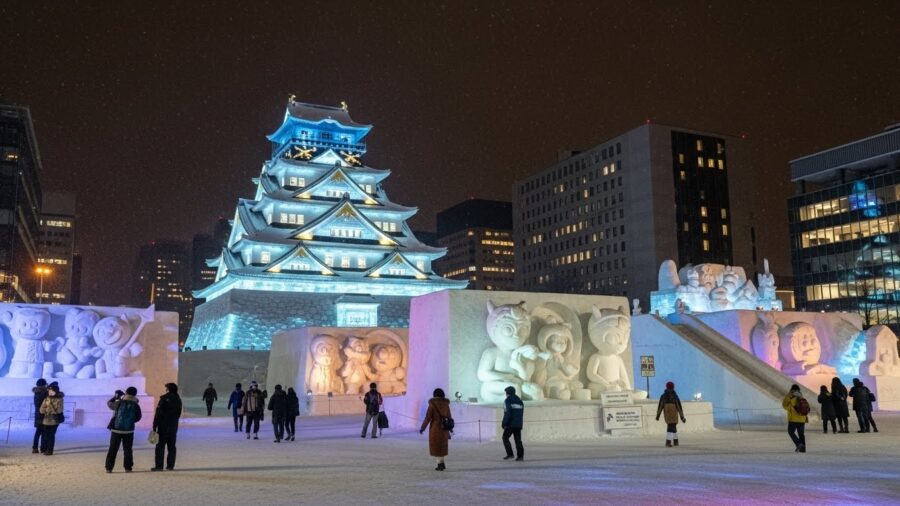
Why the Sapporo Snow Festival Snow Buildings Stun Professionals
The Sheer Scale and Structural Integrity of Snow Architecture
| Feature | Large Snow Sculpture | Standard 5-Story Building |
|---|---|---|
| Height | Approx. 12–15 meters | Approx. 15–20 meters |
| Primary Material | Compacted Pure Snow (Water) | Reinforced Concrete / Steel |
| Weight Load | 2,000 – 3,000 tons | Variable (distributed via foundation) |
| Construction Time | Approx. 1 month | 6–12 months |
| Lifespan | 7 days (Festival duration) | 50+ years |
Precision in Architectural Replication That Rivals Reality
The Master Builders Behind the Impressive Snow Structures
The Role of the Japan Self-Defense Forces in Construction
Professional Sculptors and the Dedication to Detail
| Builder Group | Primary Focus | Typical Projects | Key Characteristics |
|---|---|---|---|
| JGSDF (11th Brigade) | Structural Engineering & Logistics | Massive stages, large-scale historical replicas | Military precision, heavy machinery use, fortification training |
| Large Snow Sculpture Production Committee | Artistic Detail & Design | Intricate architectural replicas, pop culture icons | Collaboration of civilian experts, focus on fine carving |
| International Contest Teams | Creative Expression | Abstract art, cultural symbols | Global participation, high artistic value, competitive spirit |
The Construction Process of Breathtaking Snow Buildings
The creation of the Sapporo Snow Festival’s massive snow sculptures is a feat of engineering that rivals the construction of permanent edifices. Far from being simple mounds of snow, these structures—often exceeding 15 meters in height—require architectural blueprints, structural load calculations, and a rigorous construction schedule that spans several weeks. The process is a collaborative effort involving the Japan Self-Defense Forces (JSDF), professional sculptors, and hundreds of volunteers who work tirelessly in freezing conditions.
Gathering and Transporting Tons of Pure Snow
The foundation of every great snow sculpture is the quality of the snow itself. To ensure the structural integrity and the brilliant white appearance required for projection mapping and daytime viewing, only “pure snow” free from impurities is used. Snow accumulated on city streets, which often contains exhaust particles, dust, and anti-freezing agents, is unsuitable because it absorbs sunlight and melts unevenly, potentially causing collapse.
Consequently, the festival organizers execute a massive logistical operation to transport clean snow from designated “snow collection sites.” These locations typically include the port areas of Ishikari Bay, suburban golf courses, and mountain passes where the snow remains pristine. The scale of this operation is staggering:
- Total Volume: Approximately 30,000 tons of snow are transported annually for the festival.
- Logistics: A fleet of heavy-duty 5-ton trucks makes roughly 6,000 round trips to deliver the necessary material to Odori Park and other venues.
- Timing: Snow transportation begins in early January, turning the city center into a bustling construction zone long before the first tourist arrives.
From Scaffolding to Fine Carving Techniques
Once the snow is delivered, the construction follows a method known as the “Compacted Snow Method” (or Atsusetsu). Unlike smaller statues which might be carved from a single block, the large architectural replicas are built by filling a massive wooden framework with snow and compressing it until it becomes as hard as concrete. This process ensures the sculpture can withstand its own immense weight and fluctuating temperatures.
The construction timeline is divided into distinct phases, each requiring specific tools and expertise. The following table outlines the progression from a wooden skeleton to a finished masterpiece.
| Phase | Description | Key Tools & Techniques |
|---|---|---|
| 1. Framework & Scaffolding | A wooden frame is erected to define the sculpture’s rough dimensions. This internal structure holds the loose snow in place during the initial filling. | Cranes, wooden panels, steel scaffolding. |
| 2. Snow Packing | Clean snow is dumped into the frame by cranes. Workers tread on the snow and pour water over it to freeze it into a solid block, eliminating air pockets. | Excavators, water hoses, manual treading (human weight). |
| 3. Rough Carving (Ara-kezuri) | Once the snow block is solid, the wooden frame is removed. Heavy machinery and large shovels are used to carve the general shape of the building. | Backhoes, chainsaws, large scoops. |
| 4. Fine Carving (Shiage) | Sculptors carve intricate details such as windows, pillars, and eaves. “Cosmetic Snow” (Keshou-yuki)—a mixture of fresh snow and water—is applied like mortar to attach smaller parts. | Hand chisels, scrapers, water sprays (cementing agent). |
| 5. Final Inspection | Scaffolding is fully removed. The surface is polished to ensure it reflects light perfectly, and safety checks are conducted. | Brushes, finishing trowels. |
One of the most critical techniques used during the fine carving stage is the application of water. Water acts as the binding agent that turns loose snow into “snow cement,” allowing sculptors to attach delicate parts like cornices and statues to the main structure. This technique, often performed at night when temperatures are lowest, prevents the new additions from sliding off before they freeze.
The removal of the scaffolding is the final, tension-filled moment of the build. It reveals the sculpture in its entirety for the first time, often just days before the opening ceremony. For a deeper look into the history and scale of these operations, visitors can refer to the official Sapporo Snow Festival website or resources provided by the Japan National Tourism Organization.
Iconic Snow Buildings That Have Impressed the World
The defining feature of the Sapporo Snow Festival is undoubtedly the “Large Snow Sculptures” (Daisetuzou), which often exceed 15 meters in height and require thousands of tons of snow to construct. For architectural professionals and engineers, these structures are not merely decorative statues but feats of temporary structural engineering. The festival has built a reputation for recreating world-famous architecture with a level of precision that rivals the original blueprints. These massive edifices are designed to withstand variable weather conditions and gravity, utilizing complex internal frameworks and specialized snow-packing techniques that have been refined over decades.
Replicas of Historical Japanese Castles
Among the most technically demanding subjects at the festival are the replicas of Japanese castles. These structures are frequently constructed by the Japan Ground Self-Defense Force (JGSDF), whose involvement serves as a training exercise in large-scale engineering and teamwork. The challenge lies in the intricate details of traditional Japanese architecture, particularly the curved roof lines and the steep stone walls.
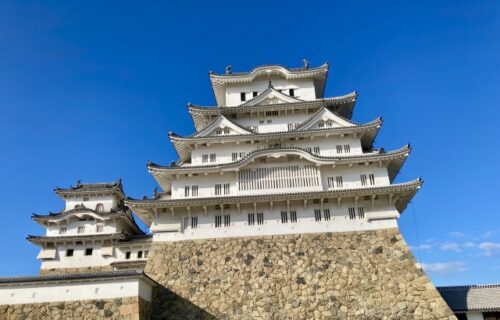
One of the most celebrated subjects is Himeji Castle, also known as the “White Heron Castle.” The pristine white snow serves as the perfect medium to replicate the castle’s famous white plaster walls. Builders pay particular attention to the Ishigaki (stone walls), often carving individual blocks of snow to mimic the specific piling patterns of the original fortress. The precision required to maintain the structural integrity of the heavy, overhanging eaves while using a material as malleable as snow is a testament to the master builders’ expertise.
Other notable recreations have included Nagoya Castle and the Tsuruga Castle. In these projects, the replication of the Shachihoko (mythical tiger-headed carp) atop the roofs requires delicate sculpting skills that contrast with the massive volume of snow used for the main keep.
Famous International Landmarks Recreated in Snow
The festival’s “International Square” and other major venues have hosted breathtaking recreations of global heritage sites, fostering international goodwill through architecture. These sculptures often involve consultation with embassies and architects from the respective countries to ensure accuracy. Unlike the solid mass of castle walls, Western and Asian religious architecture often features open arches, flying buttresses, and intricate reliefs that pose unique structural challenges for snow sculptors.
In 2016, the festival featured a massive replica of the Ruins of St. Paul’s in Macau. This sculpture was particularly noted for its detailed relief carvings on the facade, which had to be deep enough to create visible shadows but not so deep as to compromise the wall’s stability. Similarly, the 2025 festival showcased the Neuschwanstein Castle from Germany, a structure famous for its slender towers and fairytale silhouette, requiring internal reinforcement to support the verticality of the spires.
The table below highlights some of the most architecturally significant snow buildings constructed in the festival’s recent history, showcasing the diversity of styles and the scale of engineering involved.
| Year | Architectural Masterpiece | Location / Origin | Engineering Highlight |
|---|---|---|---|
| 2016 | Ruins of St. Paul’s | Macau | Intricate relief carving on a vertical facade. |
| 2018 | Yakushiji Temple | Nara, Japan | Reproduction of complex pagoda symmetry. |
| 2020 | Upopoy (National Ainu Museum) | Hokkaido, Japan | Modern architectural curves and cultural motifs. |
| 2024 | Former Sapporo Railway Station | Hokkaido, Japan | Detailed replication of Meiji-era western style architecture. |
| 2025 | Neuschwanstein Castle | Germany | Vertical stability of high spires and towers. |
These structures are often illuminated at night with projection mapping, a technique that highlights the architectural details that might be lost in the flat white light of day. For professionals visiting the Sapporo Snow Festival, the experience is a study in the transience of form and the permanence of technical skill.
Conclusion
The Sapporo Snow Festival stands as a testament to the extraordinary capabilities of snow as a construction material, transcending mere festival decoration to reach the level of architectural marvel. For construction professionals, architects, and engineers, the allure of these massive snow buildings lies not just in their aesthetic beauty, but in the rigorous engineering and logistical mastery required to bring them to life. The collaboration between the Japan Self-Defense Forces (JSDF) and veteran sculptors ensures that each structure meets strict safety standards while achieving a level of detail that rivals stone or concrete masonry.
The Convergence of Art and Engineering
What ultimately impresses professional observers is the structural integrity maintained despite the medium’s volatility. Unlike traditional materials, snow changes density and texture with temperature fluctuations. The builders’ ability to calculate load-bearing capacities and implement complex scaffolding systems within a frozen medium demonstrates a unique specialized skill set. The “Large Snow Sculptures” at Odori Park are not simply piled snow; they are engineered structures with internal frameworks of compacted snow blocks, water-cemented joints, and precisely carved facades that must withstand gravity and weather for the duration of the festival.
Furthermore, the integration of modern technology, such as projection mapping, has elevated these snow buildings into dynamic canvases. This evolution requires surfaces to be carved with mathematical precision to ensure that projected light aligns perfectly with the physical architectural features, a feat that demands absolute accuracy during the construction phase.
Summary of Architectural Highlights by Venue
To fully appreciate the scope of construction at the Sapporo Snow Festival, it is essential to understand how different venues showcase distinct types of structural expertise. The following table outlines the architectural focus of each primary site.
| Venue | Architectural Focus | Professional Interest Point |
|---|---|---|
| Odori Park | Massive Snow Buildings (10-15m high) | Demonstrates large-scale structural engineering, JSDF construction logistics, and intricate relief carving on vertical surfaces. |
| Susukino Site | Detailed Ice Sculptures | Showcases precision cutting, transparency manipulation, and the structural bonding of ice blocks rather than compacted snow. |
| Tsudome Site | Functional Snow Structures (Slides/Tunnels) | Focuses on safety engineering and durability for interactive structures that must support human weight and movement. |
The Cycle of Construction and Demolition
The final aspect that leaves a lasting impression on industry professionals is the ephemeral nature of these giants. Immediately following the festival, these masterpieces undergo a planned demolition for safety reasons. This process is executed with the same level of care as the construction, ensuring that the massive volume of snow is collapsed safely without endangering the surrounding city infrastructure. This complete lifecycle—from the transport of clean snow to the precise carving and final return to nature—encapsulates a discipline of project management that is respected worldwide.
For those wishing to witness this intersection of traditional artistry and structural engineering, the official Sapporo Snow Festival website provides the most accurate schedules and venue maps. Visiting the site offers a rare opportunity to see how the Japan Self-Defense Forces and local artisans turn millions of tons of snow into a breathtaking, albeit temporary, metropolis.