Experience Japan: How to Spend New Year’s in a Traditional Japanese House
2025年12月18日
Oshogatsu, or the Japanese New Year, is widely considered the most significant and spiritually profound holiday in Japanese culture. Unlike the boisterous countdown parties often seen in the West, the Japanese New Year is traditionally a quiet, intimate affair centered around the home and family. By exploring this guide, you will gain a deep understanding of how a Japanese house is transformed into a sanctuary for welcoming the New Year deities, known as Toshigami, and the specific rituals performed to ensure luck and happiness for the year ahead.
This article provides a comprehensive look into the timeline of domestic traditions, starting with the essential purification ritual of Osoji (big cleaning) and the placement of symbolic decorations like Kadomatsu and Kagami Mochi. You will learn the cultural reasoning behind eating auspicious foods such as Osechi Ryori and Toshikoshi Soba, and discover how families bond over shared warmth under the Kotatsu. Ultimately, understanding these customs offers insight into the Japanese mindset of spiritual renewal, gratitude, and the importance of starting the year with a clean slate and a full heart.
Preparing the Japanese House for Oshogatsu
In Japan, the New Year, known as Oshogatsu, is widely considered the most significant holiday of the year. Unlike the countdown parties common in the West, the Japanese New Year is a time of spiritual renewal and family bonding centered around the home. The preparation process is crucial, as it is believed to welcome the Toshigami (New Year gods) who bring good fortune, health, and prosperity for the year ahead. These preparations typically begin in mid-December and must be completed before New Year’s Eve.
The Ritual of Osoji or Big Cleaning
Before any decorations can be hung, the home must be purified through a ritual known as Osoji (Big Cleaning). This is not merely a physical tidying up but a spiritual act rooted in Shinto traditions, similar to the ancient ritual of Susuharai (soot sweeping). The goal is to remove the “impurities” and dust of the past year to provide a pristine environment for the deities.
Families often engage in deep cleaning activities that are overlooked during the rest of the year, such as scrubbing floors, cleaning windows, and airing out tatami mats. By cleansing the home, residents also symbolically cleanse their minds, allowing them to start the new year with a fresh, uncluttered perspective.
Decorating with Kadomatsu and Shimekazari
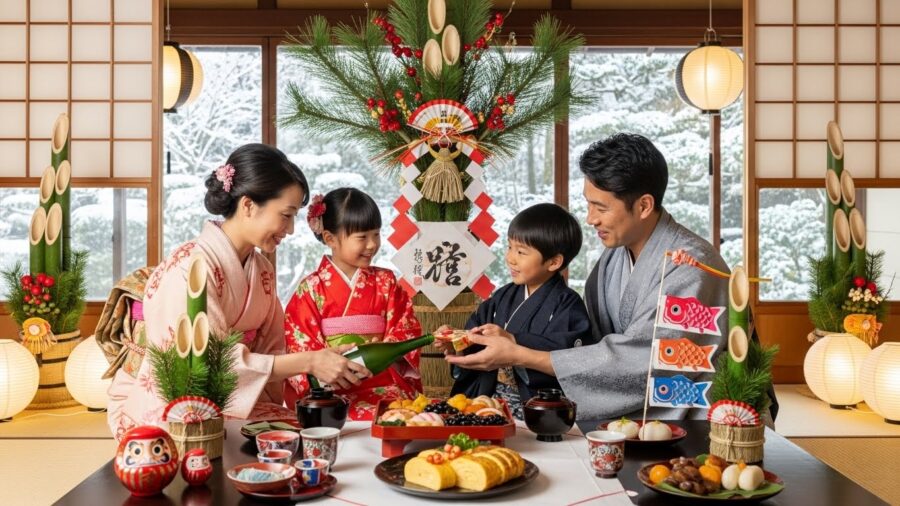
Once the cleaning is finished, the house is adorned with traditional ornaments. These decorations serve as markers to guide the Toshigami into the home and create a sacred boundary against evil spirits. It is customary to place these decorations after Christmas but to avoid specific dates: December 29th is avoided because the number nine (ku) sounds like the Japanese word for “suffering,” and December 31st is considered “One-Night Decoration” (Ichiya-kazari), which is seen as rushed and disrespectful to the gods.
The two most prominent exterior decorations are the Kadomatsu and the Shimekazari.
| Decoration | Composition | Meaning & Purpose |
|---|---|---|
| Kadomatsu | Bamboo, Pine, and sometimes Plum branches | Placed in pairs at the front gate. The pine represents longevity, while bamboo symbolizes strength and growth. They act as temporary housing (yorishiro) for the gods. |
| Shimekazari | Sacred straw rope (shimenawa), white paper strips (shide), and auspicious items like bitter oranges or ferns | Hung above the entrance door. It marks the home as a sacred space and wards off bad luck and evil spirits. |
Placing Kagami Mochi in the Tokonoma
Inside the home, the focal point of the New Year’s offering is the Kagami Mochi. This decoration consists of two round, stacked rice cakes—a larger one on the bottom and a smaller one on top—crowned with a Japanese bitter orange called a daidai. The round shape resembles ancient copper mirrors (kagami), which were considered sacred treasures.
The stacking of the mochi represents the doubling of good fortune, while the daidai symbolizes the continuity of family generations, as the word “daidai” sounds like the phrase for “generation to generation.” Traditionally, the Kagami Mochi is placed in the tokonoma, a recessed alcove found in tatami rooms intended for displaying art and flowers. In modern homes without a tokonoma, it is placed in a high, respectful position in the living room or kitchen to offer gratitude to the deities for the harvest and food.
For more insights into these traditions, you can visit the Japan National Tourism Organization’s guide to New Year.
New Year’s Eve Traditions in a Japanese Home
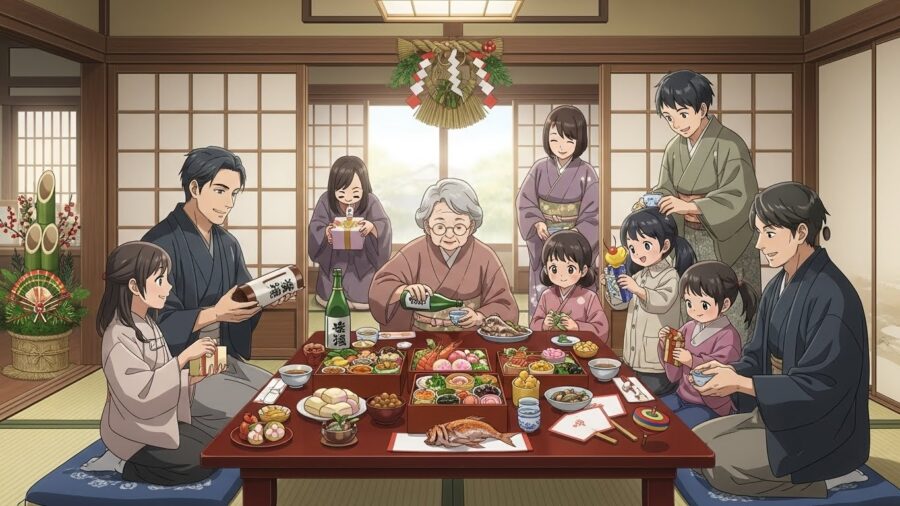
In Japan, New Year’s Eve is known as Omisoka. Unlike the loud parties and fireworks common in Western cultures, Omisoka is a time for quiet reflection, family bonding, and purification. As the final hours of the year tick away, Japanese households engage in specific rituals designed to wrap up the past and welcome the incoming year with a clean slate. This period is characterized by a warm, serene atmosphere, often spent gathered around the kotatsu (heated table) after the busy days of cleaning and preparation.
Eating Toshikoshi Soba for Longevity
One of the most essential culinary traditions on New Year’s Eve is eating Toshikoshi Soba, or “year-crossing noodles.” This dish consists of long buckwheat noodles served in a hot dashi broth, often topped with green onions or tempura. The custom, which dates back to the Edo period, is rich in symbolism regarding the transition from one year to the next.
It is crucial to finish eating the noodles before midnight. According to superstition, eating them while the year changes or leaving leftovers can bring bad luck or financial misfortune in the coming year.
| Feature of Soba | Symbolic Meaning |
|---|---|
| Long Shape | Represents a wish for a long, healthy life and the endurance of the family line. |
| Easily Cut | Symbolizes “cutting off” the hardships, disasters, and bad luck of the past year. |
| Hardy Plant | Buckwheat is resilient against severe weather, representing strength and recovery. |
For more on the varieties and regional differences of this dish, you can explore guides on Toshikoshi Soba culture.
Watching Kohaku Uta Gassen on Television
For many Japanese families, the soundtrack to New Year’s Eve is the Kohaku Uta Gassen (Red and White Song Battle), broadcast by the national public broadcaster, NHK. Airing from the evening until shortly before midnight, this music program has been a cultural staple since the 1950s.
The show divides the country’s most popular musical artists into two teams: the Red Team (female artists) and the White Team (male artists). Viewers and judges vote to decide the winning team at the end of the night. It is a rare program that appeals to all generations, featuring everything from traditional enka singers to modern J-pop idols and rock bands. Families often watch this show together while eating their soba or peeling mikan (mandarin oranges), creating a shared sense of national unity and nostalgia.
Listening to the Joya no Kane Bells
As midnight approaches, the atmosphere shifts from entertainment to spirituality. Buddhist temples across Japan perform a ritual known as Joya no Kane. This involves ringing the large temple bell 108 times. The ceremony typically begins shortly before midnight, with the final toll struck exactly as the New Year begins.
The number 108 represents the worldly desires (bonno) that plague the human heart, such as anger, jealousy, and greed. It is believed that each toll of the bell dispels one of these desires, cleansing the soul and allowing people to enter the New Year with a pure mind. The deep, solemn sound of the bells echoing through the cold winter night is a defining sensory experience of a traditional Japanese New Year.
While many watch the ceremony on television, others visit local temples to witness it in person or even participate in ringing the bell. For travelers hoping to experience this, the Japan National Tourism Organization provides excellent information on temple locations and etiquette.
Celebrating New Year’s Day Morning
The morning of January 1st, known as Gantan, is the most auspicious time of the Japanese New Year. Unlike the lively countdown celebrations of the West, the atmosphere in a traditional Japanese house is solemn, peaceful, and focused on family connection. The day begins with everyone changing into traditional kimono or formal clothes to welcome the new year with a fresh spirit.
Family Greetings and Drinking Otoso
The first ritual of the morning takes place in the washitsu (tatami room) or the main living area, where the family gathers to exchange the formal greeting, “Akemashite omedetou gozaimasu” (Happy New Year). Following the greetings, the family partakes in a special ceremonial drink called Otoso.
Otoso is a medicinal spiced sake believed to ward off evil spirits and ensure health for the year ahead. It is prepared by steeping a mixture of herbs and spices—including cinnamon, sansho pepper, and rhubarb—in sake or mirin. The drink is served from a lacquered pot into a set of three stacking cups called sakazuki.
According to tradition, Otoso is drunk in a specific order: from the youngest family member to the oldest. This unique custom symbolizes the transfer of youthful vitality and energy from the young to the elderly. As the cup is passed, it is said that “if one person drinks this, their family will not fall ill; if the whole family drinks, the village will remain healthy.”
Enjoying Traditional Osechi Ryori
After the Otoso ritual, the family sits down to enjoy Osechi Ryori, the centerpiece of the New Year’s feast. These dishes are prepared in advance and stored in multi-tiered lacquerware boxes known as jubako. The act of stacking the boxes symbolizes the piling up of happiness and good fortune for the future.
Osechi is not just a meal; it is a collection of symbolic foods, each chosen for a specific meaning related to prosperity, longevity, or health. Because cooking is avoided during the first three days of the year to avoid disturbing the gods (and to give the cook a rest), Osechi dishes are preserved with sugar, vinegar, or soy sauce to last without refrigeration.
| Osechi Dish | Meaning and Symbolism |
|---|---|
| Kuromame (Black Soybeans) | Symbolizes good health and the ability to work hard (mame) and diligently. |
| Kazunoko (Herring Roe) | Represents fertility and the wish for many children and a prosperous family line. |
| Tazukuri (Candied Sardines) | Literally meaning “making rice fields,” these symbolize a bountiful harvest. |
| Datemaki (Sweet Rolled Omelet) | Resembling a rolled scroll, this dish represents a wish for scholarship, culture, and learning. |
| Kamaboko (Cured Fish Cake) | The red and white colors mimic the rising sun and are considered celebratory and festive. |
| Kurikinton (Candied Chestnuts) | With its golden color, this dish symbolizes wealth, financial prosperity, and good luck. |
| Ebi (Shrimp) | The curved back of the shrimp represents longevity, wishing for a long life until one’s back is bent. |
| Renkon (Lotus Root) | The holes in the root symbolize an unobstructed view of the future and clarity. |
Savoring Ozoni Mochi Soup
Alongside Osechi, a hot soup called Ozoni is served. This dish contains mochi (rice cakes) and is considered an offering to Toshigami-sama, the New Year deity. Eating the mochi is believed to impart the strength of the rice god to the diner.
Ozoni varies significantly by region, often reflecting the historical divide between the samurai culture of the east and the court culture of the west. These regional differences are a profound expression of local identity within the Japanese home.
- Kanto Style (Tokyo and Eastern Japan): The soup is typically a clear broth (sumashi-jiru) seasoned with soy sauce and dashi. The mochi used is square-shaped (kaku-mochi) and is usually toasted or grilled before being added to the soup. Common ingredients include chicken, komatsuna (Japanese mustard spinach), and decorative kamaboko.
- Kansai Style (Kyoto, Osaka, and Western Japan): The soup is made with white miso (shiro-miso), giving it a sweet, creamy, and opaque appearance. The mochi is round (maru-mochi) and is boiled rather than toasted. The round shape symbolizes harmony (enman) and the circle of family relationships. Ingredients often include taro (satoimo) and daikon radish.
Whether the soup is clear or miso-based, enjoying Ozoni is a comforting ritual that warms the body and soul, grounding the family in their regional heritage as they begin the new year.
Relaxing and Family Time During the Holidays
Once the formal rituals of the morning are concluded and the Osechi dishes have been savored, the atmosphere in a Japanese home shifts from solemn reverence to relaxed conviviality. The afternoon and the following days of the New Year holidays, known as sanganichi (the first three days of January), are dedicated to bonding with family. In the warmth of the traditional house, generations come together to exchange gifts, share seasonal fruits, and engage in nostalgic play.
Giving Otoshidama to Children
For children in Japan, the highlight of New Year’s is undoubtedly receiving Otoshidama. This tradition involves adult family members giving monetary gifts to children and young adults. The money is never handed over naked; it is carefully placed inside small, decorated envelopes called pochibukuro, which often feature zodiac animals or auspicious traditional motifs.
The roots of this custom lie in the offering of rice cakes (kagami mochi) to the Toshigami deity. Historically, these blessed rice cakes were distributed by the head of the household to family members as a transfer of the deity’s power. Over time, this evolved from rice cakes to gifts and eventually to the cash allowance seen today. It is customary to use crisp, brand-new bills for Otoshidama, symbolizing a fresh start for the new year.
While the amount varies based on the relationship and the family’s financial situation, there are general market rates determined by the child’s age. It is common for the amount to increase as the child grows older.
| Age Group | Average Amount (JPY) |
|---|---|
| Preschoolers | ¥500 – ¥1,000 |
| Elementary School (Lower Grades) | ¥1,000 – ¥3,000 |
| Elementary School (Higher Grades) | ¥3,000 – ¥5,000 |
| Junior High School | ¥5,000 – ¥10,000 |
| High School and above | ¥10,000+ |
Staying Warm Under the Kotatsu with Mikan
The centerpiece of relaxation in a Japanese home during winter is the kotatsu. This low wooden table frame is covered by a heavy futon or blanket, with a table top placed on top and a heat source underneath. Families gather around the kotatsu, slipping their legs under the blanket to trap the heat, creating a cozy communal space that encourages conversation.
An inseparable companion to the kotatsu is the mikan (Japanese mandarin orange). A basket of these bright orange fruits is a staple on the table during New Year’s. Peeling and eating mikan while watching special holiday television programs is a quintessential Japanese winter experience. Culturally, eating mikan is believed to provide essential Vitamin C to prevent colds during the chilly season. The image of a family huddling together under the kotatsu, eating mikan, and idling away the time is often affectionately referred to as nete-shogatsu (sleeping New Year), representing the ultimate form of holiday relaxation.
Traditional Games like Karuta and Sugoroku
New Year’s is also a time for traditional play, known as shogatsu asobi. While modern entertainment is prevalent, many families still cherish analog games that have been played for centuries. These games are not just for fun; they often carry auspicious meanings or educational value.
Karuta is a card game that requires listening skills and quick reflexes. The most famous version, Hyakunin Isshu, uses a set of 100 classical waka poems. One person reads the first half of a poem, and players race to grab the card containing the corresponding second half. It is a spirited game that often becomes competitive among family members.
Sugoroku is a board game similar to Snakes and Ladders, where players roll dice to move pieces across a board depicting a journey. Another popular activity is Fukuwarai (lucky laugh), a game similar to “pin the tail on the donkey.” A blindfolded player attempts to place paper cutouts of facial features (eyes, nose, mouth) onto a blank face outline. The resulting comical faces usually lead to uproarious laughter, which is said to bring good fortune for the coming year, echoing the proverb “Fortune comes to a gate of laughter” (warau kado ni wa fuku kitaru).
For more on traditional Japanese New Year games and their cultural significance, you can explore detailed guides on Savvy Tokyo or Japambience.
Conclusion
Spending the New Year holidays in a traditional Japanese house is a profound cultural experience that goes far beyond a simple vacation. It is a spiritual journey of renewal, deeply rooted in the concept of clearing away the old to welcome the new. From the meticulous cleaning rituals of Osoji to the quiet warmth of family time under the kotatsu, every action serves a specific purpose in honoring the turning of the year.
Welcoming the Toshigami: The Spiritual Heart of Oshogatsu
The essence of the Japanese New Year lies in the reception of the Toshigami, the Shinto deity of the New Year who is believed to visit every household to bestow good health and prosperity. The preparations detailed throughout this article—the placement of the Kadomatsu at the gate and the Kagami Mochi in the alcove—are not merely decorative. They act as temporary vessels (yorishiro) for this divine spirit. By participating in these traditions, residents of a Japanese home actively create a sanctuary that bridges the human and spiritual worlds, ensuring a harmonious start to the year.
Timeline of Key Traditions in the Home
The transition from the old year to the new, known as Nenmatsu Nenshi, follows a distinct rhythm. While the specific customs may vary by region, the following timeline outlines the essential events observed in a traditional household.
| Time Period | Custom | Cultural Significance |
|---|---|---|
| December 31 (Omisoka) | Eating Toshikoshi Soba and listening to Joya no Kane | The long buckwheat noodles symbolize a wish for a long life, while the 108 bells rung at temples purify the 108 worldly desires (bonno) before the new year begins. |
| January 1 (Gantan) | Enjoying Osechi Ryori and drinking Otoso | Families share auspicious foods to welcome the Toshigami. Using special chopsticks (iwai-bashi), the meal is a communal act of consuming the deity’s blessings for health and harvest. |
| January 1–3 (Sanganichi) | Hatsumode and reading Nengajo | The first three days are for visiting shrines to offer prayers and reading New Year’s postcards (nengajo) to renew bonds with friends and relatives. |
| January 7 or 15 (Matsunouchi ends) | Removal of decorations | The period during which the Toshigami stays in the house ends. Decorations like the Kadomatsu are taken down, marking the return to daily life. |
| January 11 (Kagami Biraki) | Opening the Mirror Rice Cake | The Kagami Mochi is broken (never cut) and eaten in a soup like Zenzai or Ozoni. This ritual signifies ingesting the power of the deity that resided within the mochi. |
Preserving the Harmony of “Wa”
Ultimately, the Japanese New Year is a celebration of Wa (harmony). The stillness of the morning on New Year’s Day, broken only by the exchange of formal greetings (aisatsu), sets a tone of respect and gratitude. Whether it is the excitement of children receiving Otoshidama or the shared laughter over a game of Karuta, these moments reinforce the family unit. For visitors and residents alike, embracing these customs offers a rare opportunity to slow down and appreciate the cyclical nature of time, carrying the warmth and blessings of the Toshigami into the months ahead.